The 1900s saw a surge in quilt production as the two World Wars brought demands for quilts to be sent overseas to men at the front and to the many citizens of our allies who lost their homes in the air attacks.
Always, quilters rally to give quilts to people in need. In the war years, the quilters of Canada made quilts through church groups and women’s institutes. These were sent to the Canadian Red Cross for distribution.
Women’s roles during WWI and WWII – Image courtesy of the Canadian Red Cross
The Canadian Red Cross
The Red Cross had a quota of goods to be produced by region. For the quilts, the fabric could not be purchased; it was to come from reclaimed fabric, even men’s suits.
While this is separate from our story, readers can find this history on the CQA website (canadianquilters.com) or Canadian researcher Joanna Dermenjian’s website (sutureandselvage.ca).
Canadian Red Cross nurses and volunteers were prevalent during the war years; both in the making and the distributing of cloth. Image above and below: courtesy of The Canadian Red Cross Society(CRCS) and Wiki Commons.Quilt of Valour, quilter unknown. Image courtesy of the CQG
Label of the Guilt made by members in 2008 for the Canadian Comfort and Remembrance Project. The quilt is #17. It was given to the family of Corporal Darren Fitzpatrick in 2010. Image courtesy of the CQG.Remembrance Day Quilt (Above). Veteran Arts & Craft Program Quilt (Below). Images courtesy of CQG and Canadian Red Cross Society (CRCS).Veteran’s Quilt – Canadian Red Cross Society
Post War Era
1970s
The upsurge in interest in quilting in the 1970s came after a lull following WWII. Women entered the workforce during the war, and this trend became the new reality of Canadian society.
Working eight to ten hours a day outside the family unit left little time for women, and quilters who are mainly women, to make quilts. At the same time, in the post-war recovery, the ready-made garment and bedding industry surged.
Quilts in Museums
The idea of quilts as living and breathing works of art and not just practical items started to emerge shortly after the upsurge of attention to quilting. It was noted by Canada Quilts editor Mary Conroy in 1973, who quoted E.N. Roulston:
There is no reason one cannot be creative and be a good craftsman; the best approach to any craft medium is the practical one. I still think that the best springboard to creativity is a good knowledge of technique.
Modern Art vs. Antique Quilts
Conroy credits the move to show quilts in museums to two Americans: a writer, Gail van der Hoof and a craftsman, Jonathan Holstein. The pair, noticing the resemblance between some discarded antique quilts and modern art, gathered and displayed a collection attractively.
Then, through sponsorship by the Whitney Museum of American Art, they took the display on tour through the United States and Europe in 1971 (Conroy p 105). This event made museums see quilts as art objects, not as craftwork.
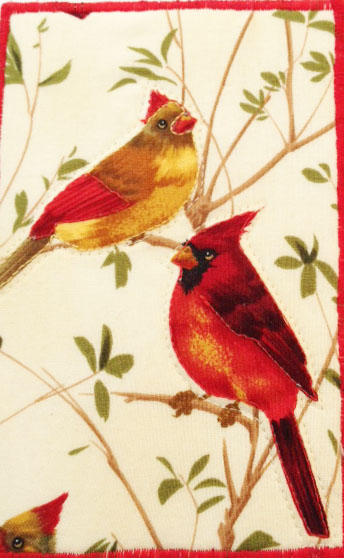
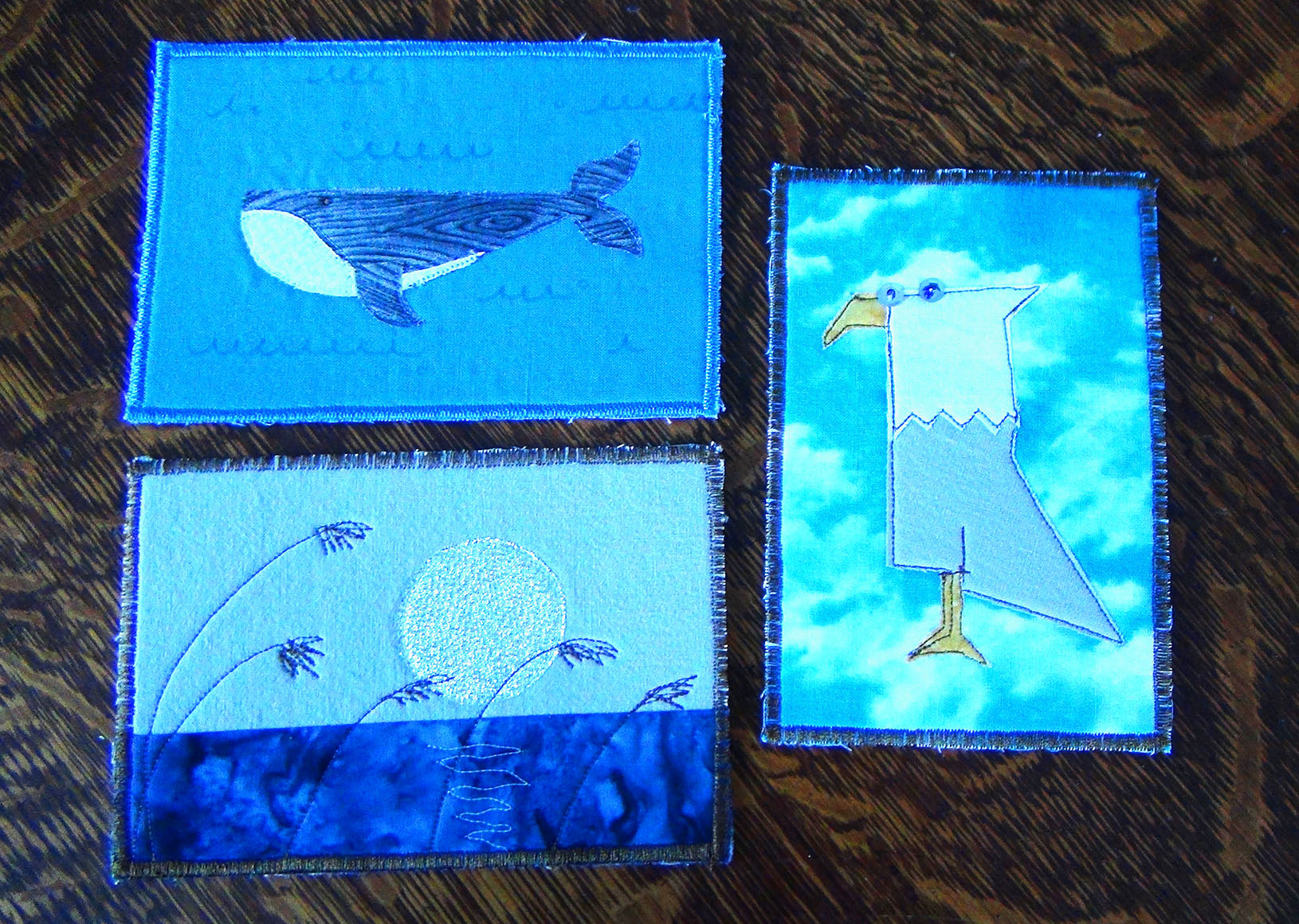
Art Revolution – Postcards by the Cranbrook Quilters Guild (CQG)
The National Gallery of Canada
At this time, Joyce Wieland, a Toronto artist working with fabrics and quilting techniques to create “assemblages.” Quilts being associated with cottage craft, were featured in the National Gallery of Canada. This boosted the status of quilts, at least in eastern Canada. Here, where we reside, the West has traditionally been slower in adopting such radical ideas (Top image courtesy of the National Gallery of Canada; Eagle Postcard courtesy of CQG).
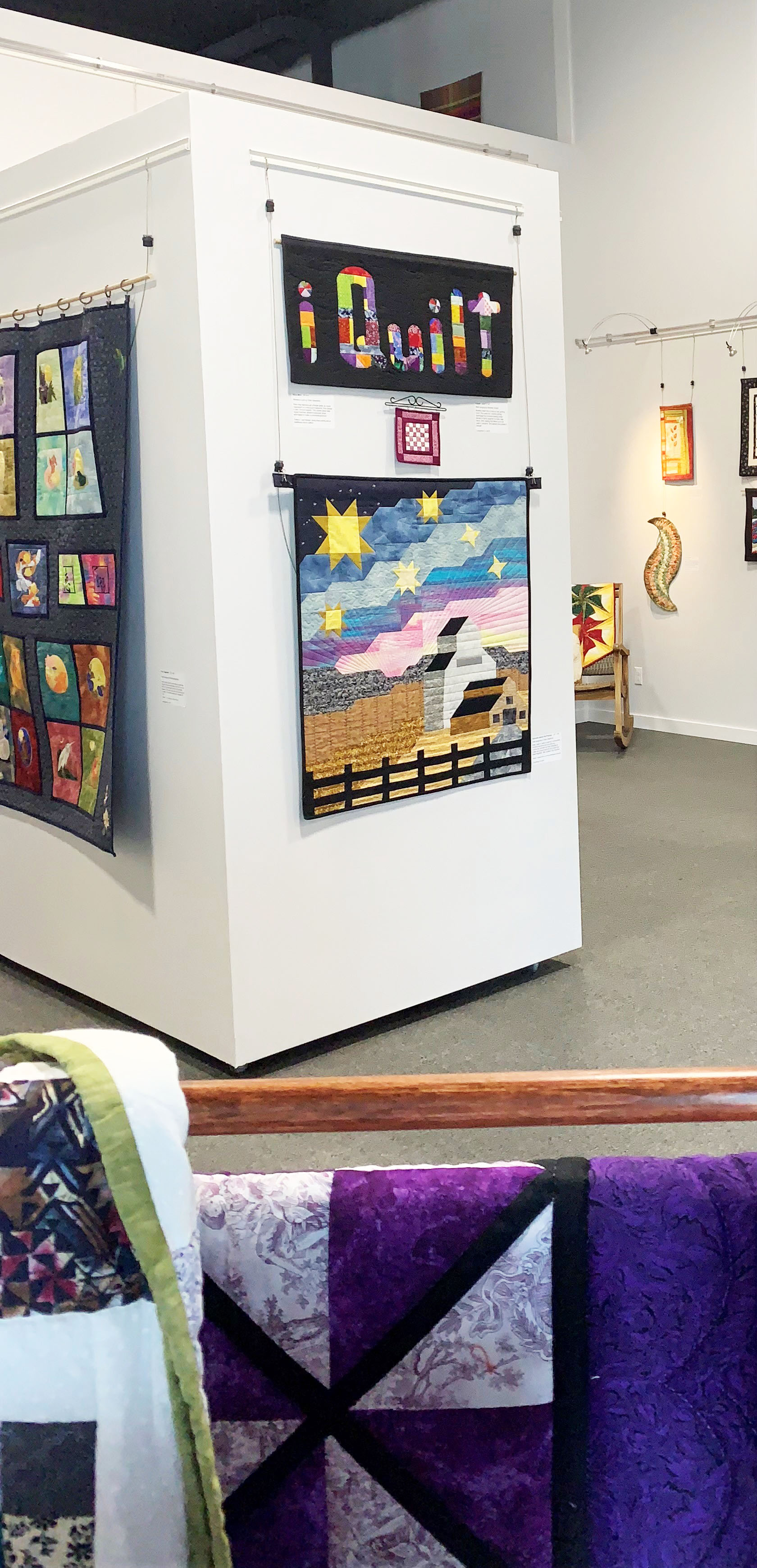
I Quilt Exhibit CQG
CQG broke the mold with its I Quilt exhibit in August 2022, refusing to settle for a lesser title, the guild demonstrated through its work that fabric creation is a true art form and one worthy of acknowledgment by the arts community.
Words from the I Quilt exhibit:
Welcome to this evening: a close encounter with quilting.
The Cranbrook Quilters Guild members are thrilled to have a “gallery exhibit.”
Those of you who are not quilters may be wondering “where are the quilts?” as these pieces aren’t quilts that evoke the feelings of comfort, home, and warmth.
Any of these pieces could become that quilt.
These are art forms showing quilting techniques… that enlarged or duplicated many times could make up that quilt.
One of the aims of this exhibit is to show the variety of techniques that make up the quilting arts – from traditional techniques used by the Manx women to modern techniques such as paper piecing and improv quilting.
Unlike other art materials, everyone has a personal connection to fabric.
Moments after your birth you were wrapped in soft cotton and at your passing, you will be wrapped again.
You only need to look around you tonight at the clothes each of us chose to see a part of that connection … and that personal connection to fabric is the basis of a quilter’s life – a fabric collection evokes the same childish thrill as a new box of 64 Crayola crayons.
Another aim of the show is to say quilting doesn’t have to be costly.
You can play with any fabric – it doesn’t have to be meters of quilting cotton fresh from the quilt store — although that is certainly a delicious option.
It can be other fabric – your old jeans, shirts, leftovers from other quilts, old linens… just scraps of fabric – with this in mind the thrift shops become a quilting boutique.
It’s all in how you play with the fabric you have.
You can quilt by hand or by machine.
Fabric, a needle and thread, scissors, and maybe a cardboard template is the start of many a fine quilt.
The common log cabin/courthouse steps block traditionally used the span of your hand as the block size, the length of your thumb for the middle square, and the length of your middle finger as the width of the strips…
Your machine doesn’t need to be fancy… just a straight stitch is good and a way to mark a quarter-inch seam, which is the “quilt-police standard” … though modern improv quilting is challenging that notion.
Our auction quilts speak to how the scrappy start becomes the comforting cover for the couch.
All quilts tell stories … and bring out other stories…The stories quilts tell is another part of this exhibit.
The stories talk about who the piece was made for as most quilts are made for someone,
why the technique seemed interesting,
picking out the fabric…
to picking that time, place and company to create it…
to the tactile sensations as you sewed
and the symbol embedded in the fabric, pattern or quilting motif
to the brain work in figuring out of the pattern …
and the “harsh words” when pieces didn’t line up – fabric is slippery and stretchy! …
to the final AHA moments when it was finished and admired.
An aim of any quilt show, is to have our creations admired…though most of the joy comes from the process of quilting.









 CranbrookQuiltersGuildHistory