
Quilt Gallery — Overview
Our Guild’s purpose story is written in our Constitution and Bylaws borrowed from the Creston Valley Quilters Guild. This document’s origin is unknown, but a “google search” shows that our constitution mirrors most Canadian quilt guilds.
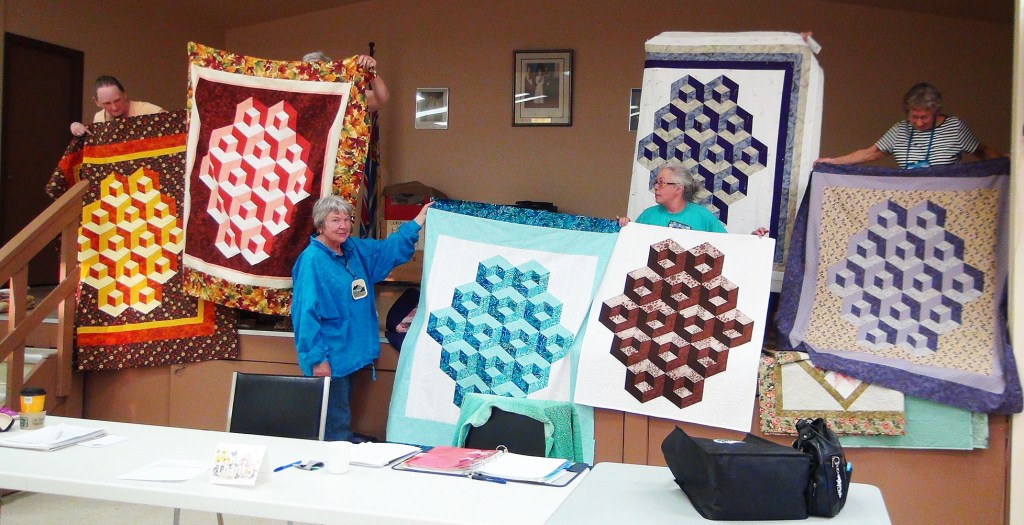
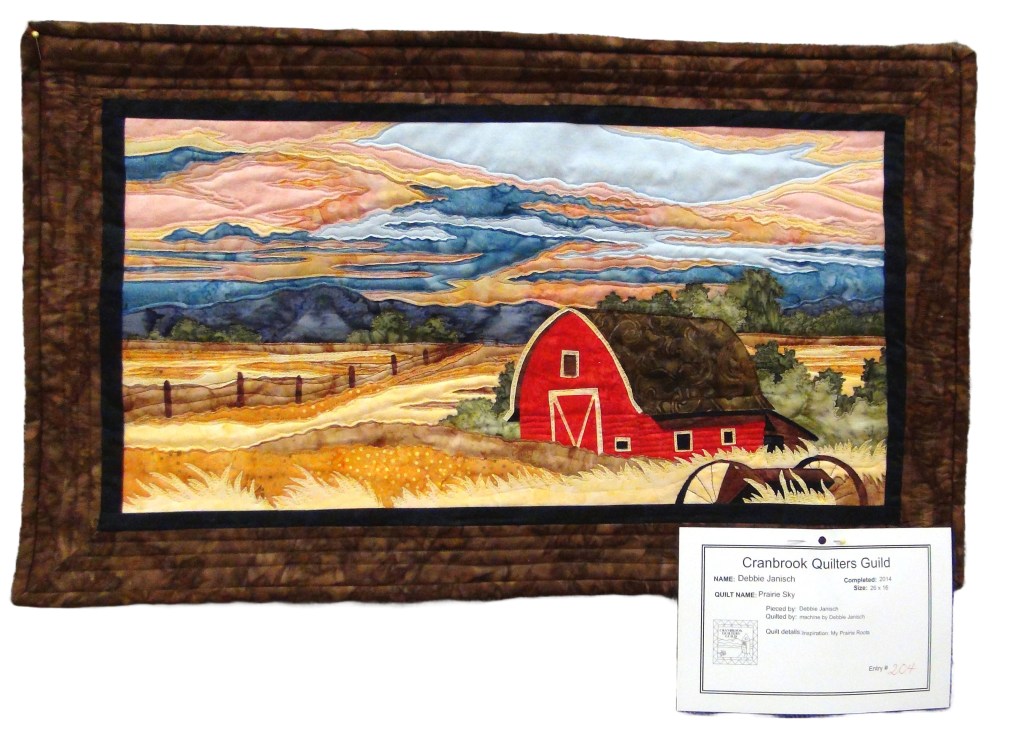
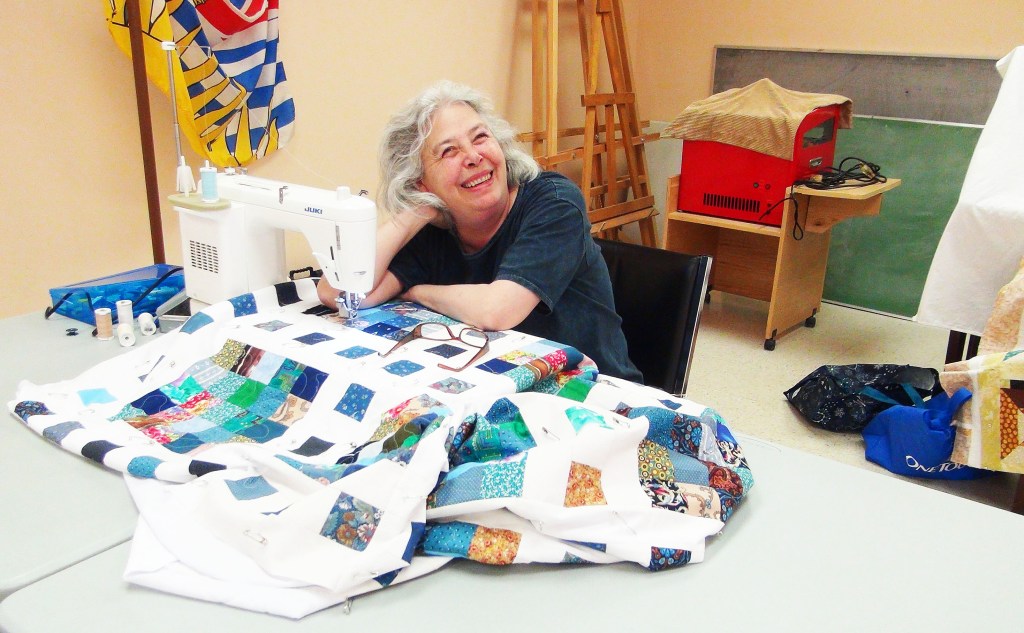
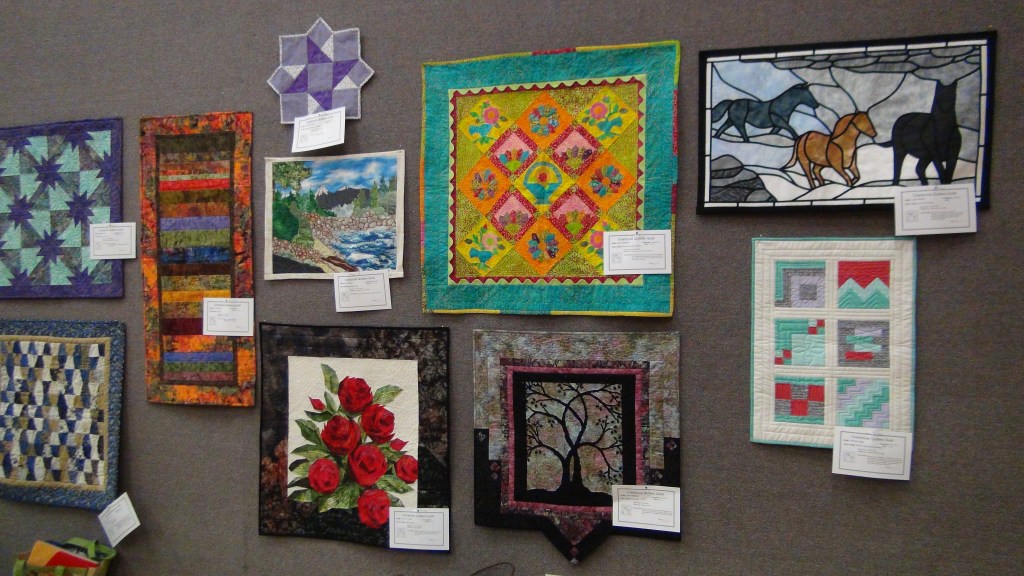
Likely, the text originated with one of the early Ontario guilds that were foundational to the start of the Canadian Quilting Association/Association Canadienne de la Courtepointe (1983-present)
Quilting began as a utilitarian but essential pastime for women who mostly used old clothing and other fabric to piece together quilts to provide warmth in our cold northern climate.
Even with these meagre resources, women created pieces of beauty by sewing the fabric into what we now call “traditional quilt blocks,” for example, a bear paw block or a log cabin block, both with their histories.
From these beginnings, the “art of quilting” has evolved as quilters use striking combinations of colour and fabric texture/print to create a serviceable and artistically pleasing product.
Today, one of the arguments could be that the “art component” is outshining the “serviceable” aspect of quilts, thought of as “sustainability in quilting,” which is now a flourishing topic (CQA magazine). The trend is moving back to quilts made from the scraps of other projects. The trend is moving back to quilts made from the scraps of other projects.
Of these early Canadian women and their quilts, Ruth McKendry, a Canadian quilt historian/collector, bemoaned:
Quilting is a utilitarian but artful practice
With nobody remembering and nobody caring about the women who had sat sewing them by the sunny kitchen window through the long winter afternoons…Someone should record the love and labour that went into the making of these Ontario bedcovers before their history was lost forever….. the extra effort that the women had put into even useful items to make them attractive to the eyes as well as functional.
“Quilting as an art form? Does it mean that in the past, when a weaver produced a utilitarian object as well as decorative it was not a work of art no matter how artistic the colour scheme, while a wall hanging is? Is not a beautiful quilt as much an art form as a wall hanging formed from quilted cloth? Who says that fine arts are superior to fine crafts?”
– E.N. Roulston (1971, Handicrafts) as cited in Conroy, Mary. 1976. 300 Years of Canada’s Quilts. Griffin House: Toronto, p. 104
Technique translates to Fun – the joy of Quilting
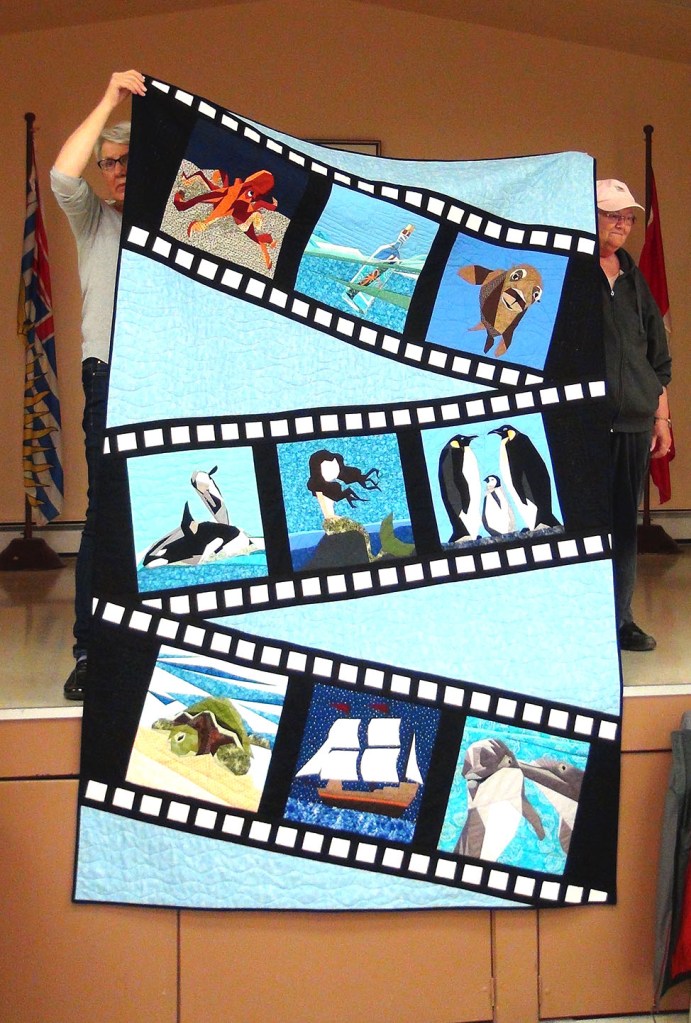
“I was hooked immediately when I took Lisa’s(Lisa Sharpe – CQG President 1986-1987) class in 1994 at the old swimming pool rec centre. It was like painting with fabric. I wasn’t sure about adding the guild to my already full plate. Someone advised: just pick what you can or want to do. I jumped in. When the kids left, I took over a double bedroom for my space, but ooze through the house. Quilters give without counting the costs to ourselves.” – Mary Lindquist (1994) – Painting with fabric
Mary Conroy, the editor of the first quilting magazine in Canada, Canada Quilts (1973), describes the upsurge of interest in quilting in the 70s in her book “300 Years of Canada’s Quilts” p. 104. She attributed it to a blurring of the line between crafts and fine arts as quilting displays at local fairs in eastern Canada were moved from the women’s section into art galleries and even museums.
Case studies that celebrate the artistry can fuel curiosity and ignite inspiration.
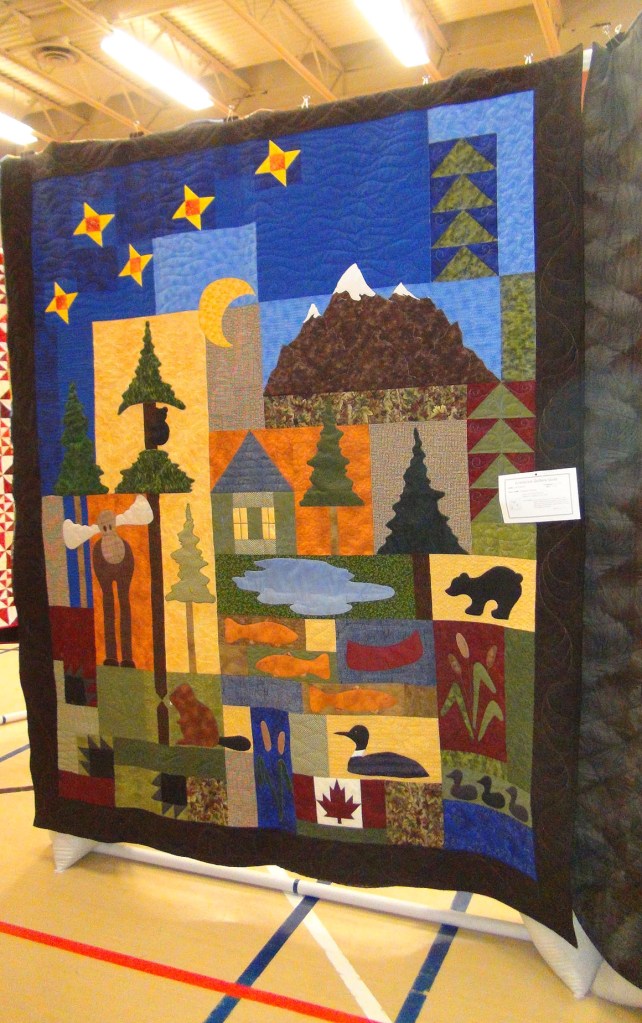
 CranbrookQuiltersGuildHistory