
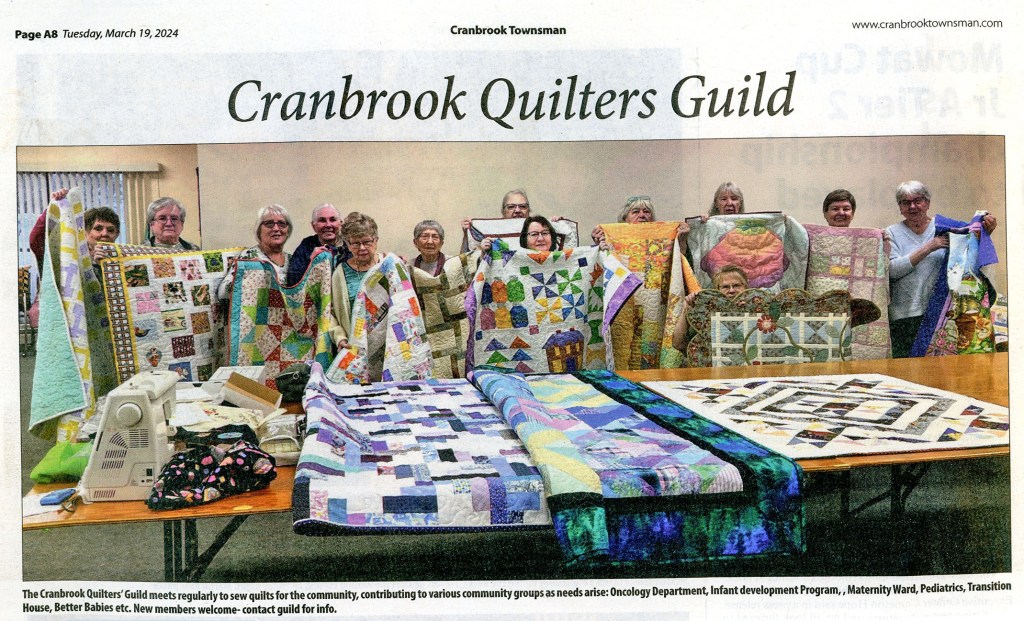
Quilters are generous. Other craft guilds, like weavers and carpenters, don’t “give” their products away. Tangible giving takes the form of giving quilts and providing inspiration through Quilt Shows. Within tangible giving is the generosity extended to each other to help fellow members learn the skills and to be a loyal part of the guild community.
Susan Little CQG Member
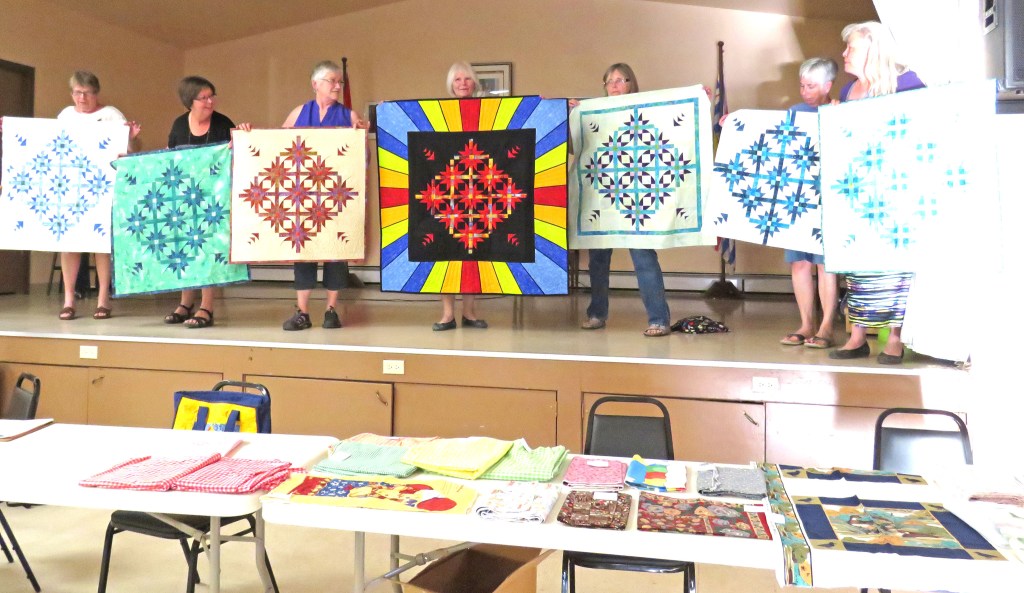
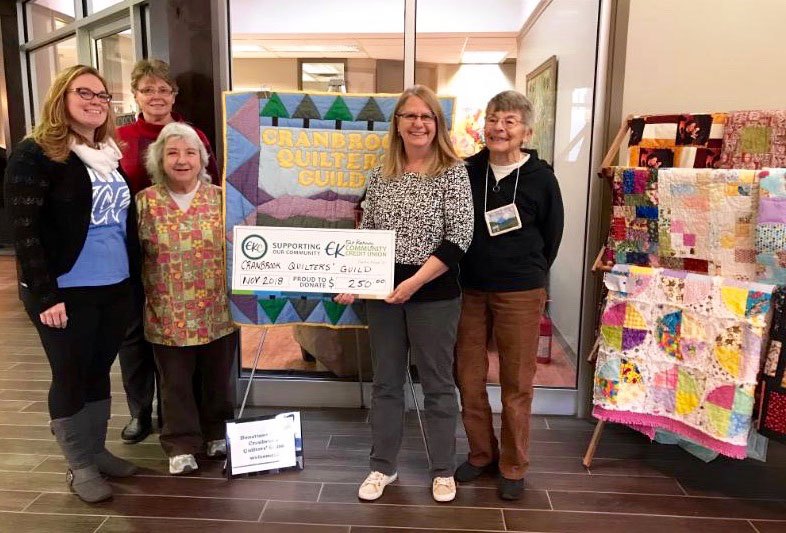
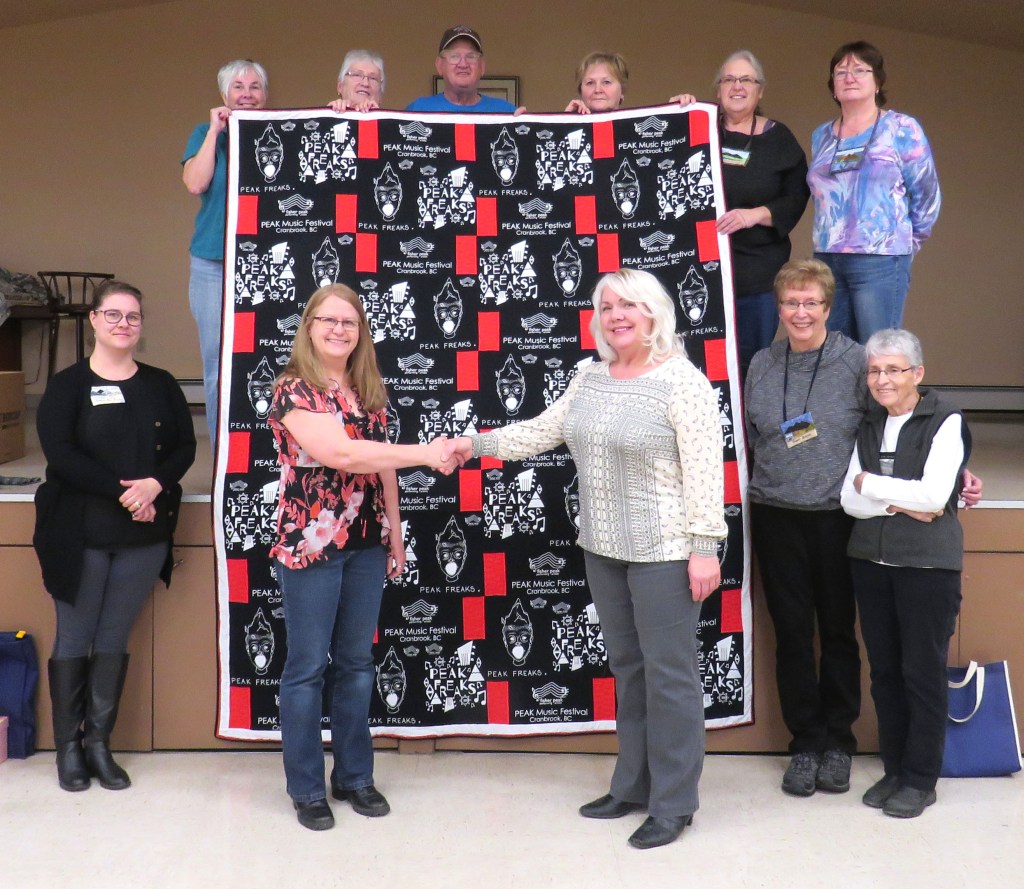
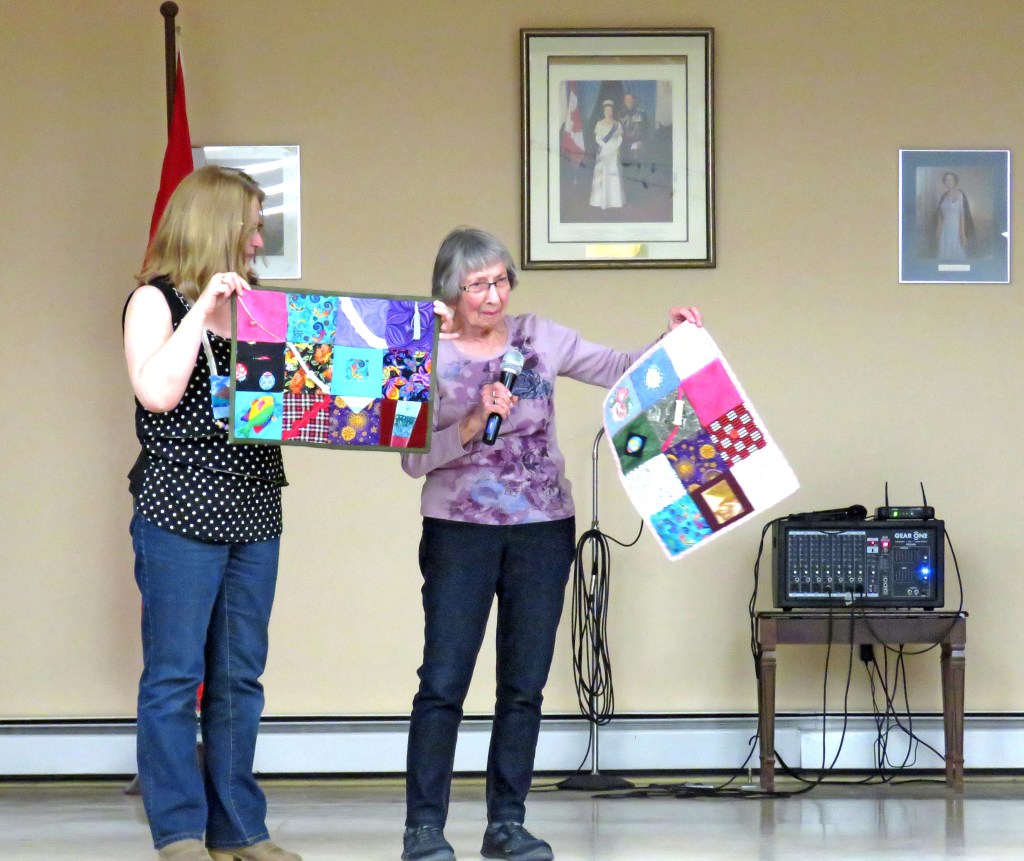
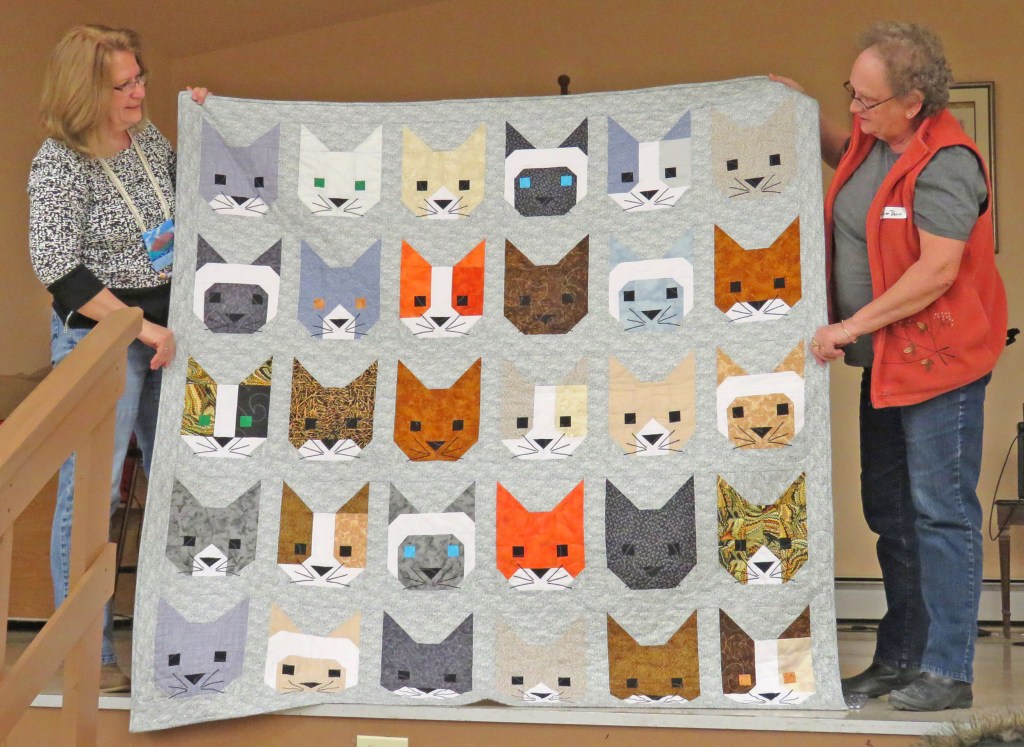
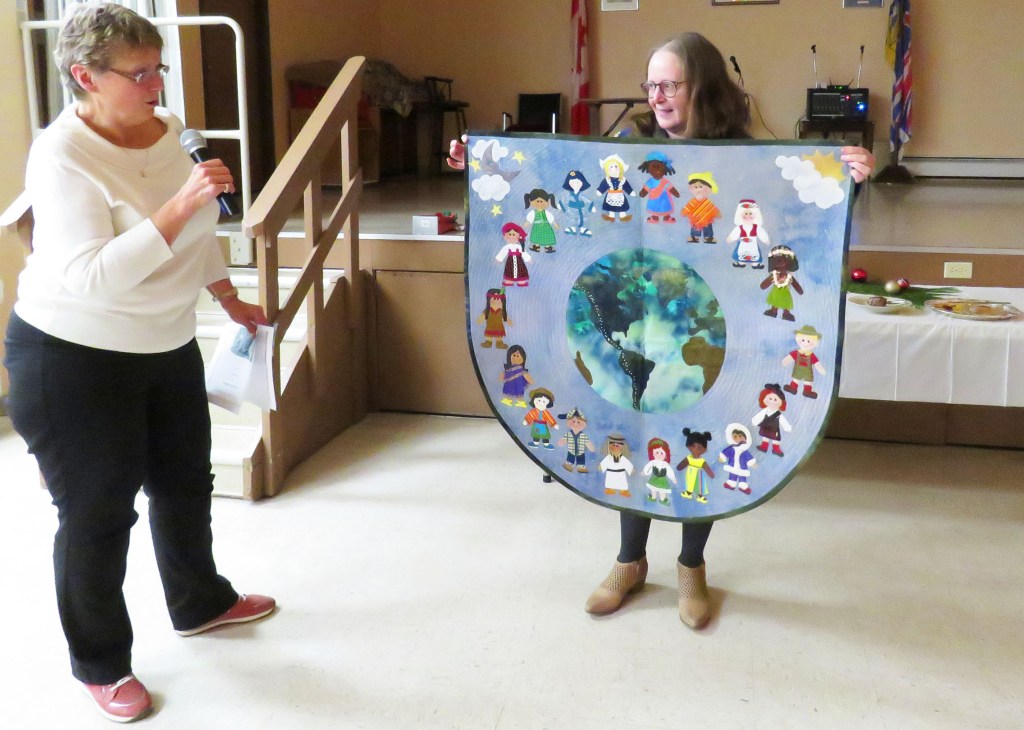
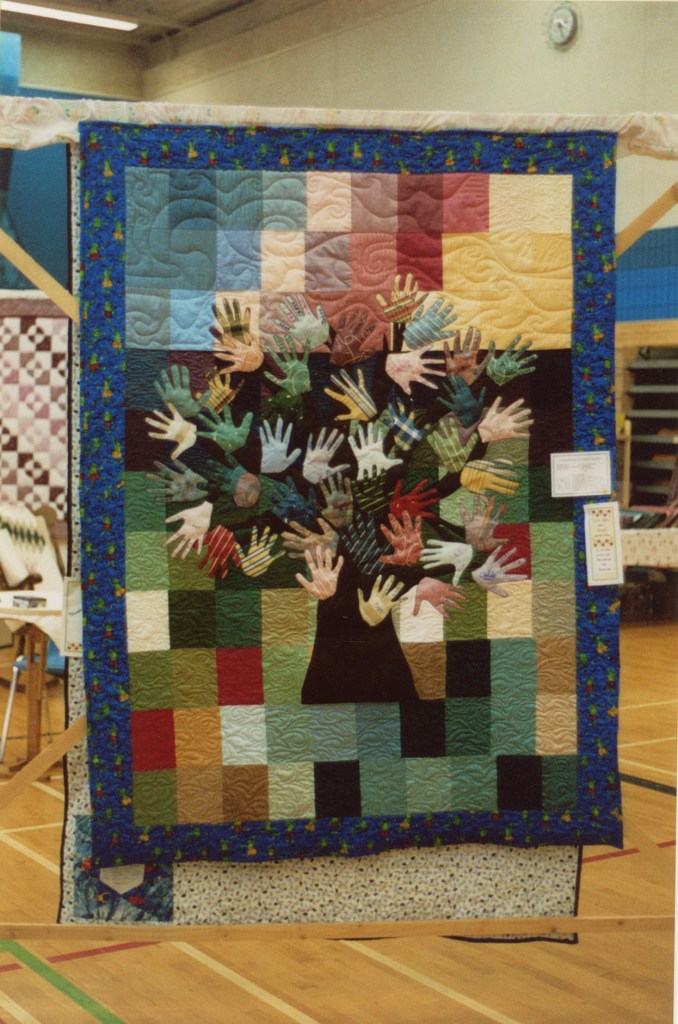
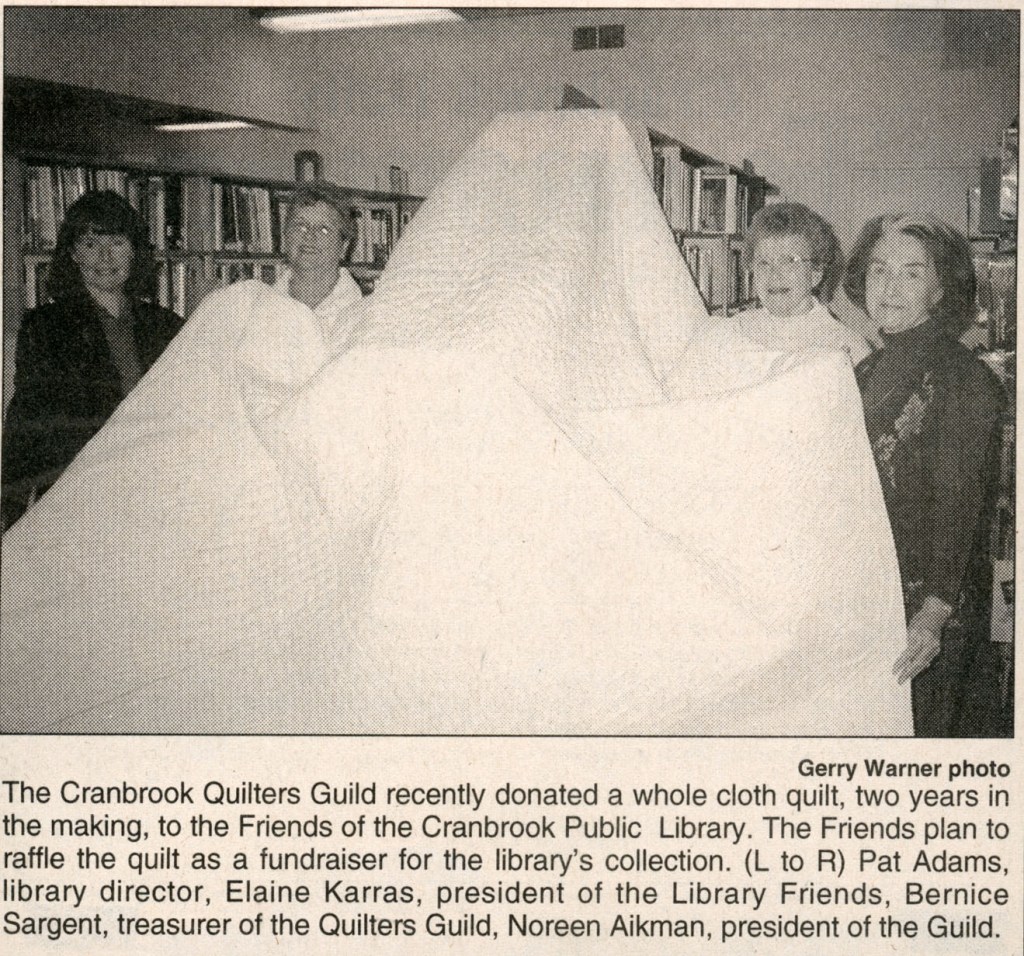
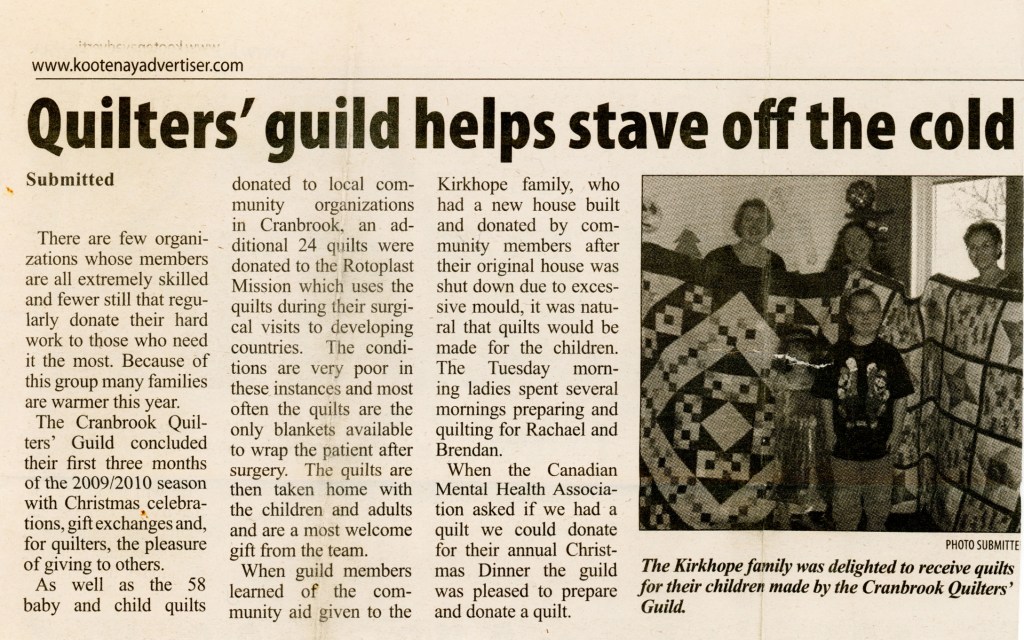
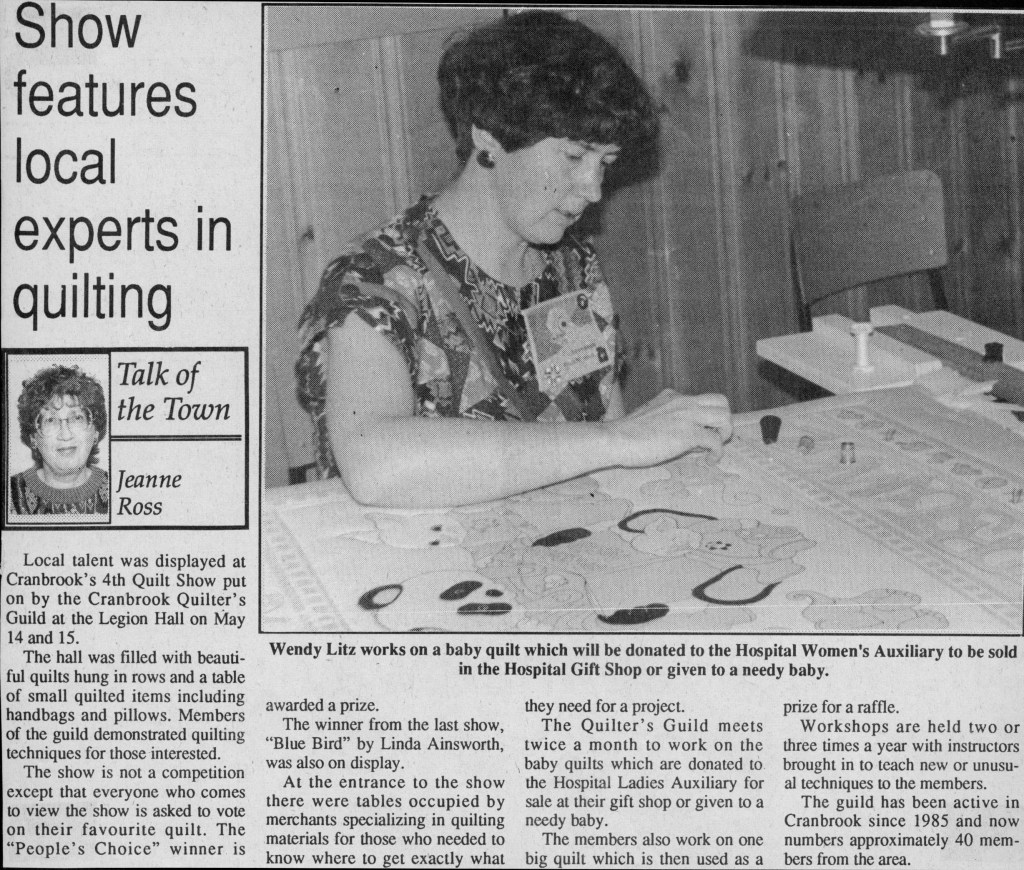
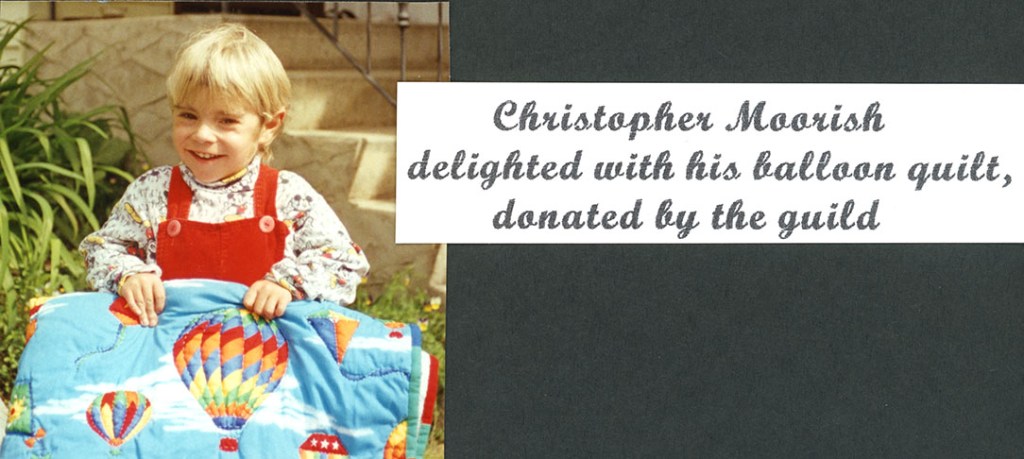
Since it’s inception, the Constitution and Bylaws of the guild included giving quilts as an objective. Members are asked to contribute to the making of a “donation” quilt each year. The guild donates these quilts to the community to distribute to its clients.
The quilts were given out by hospital staff and through Social Services. The guild liked to have one or two “in reserve” for a needy baby or child.
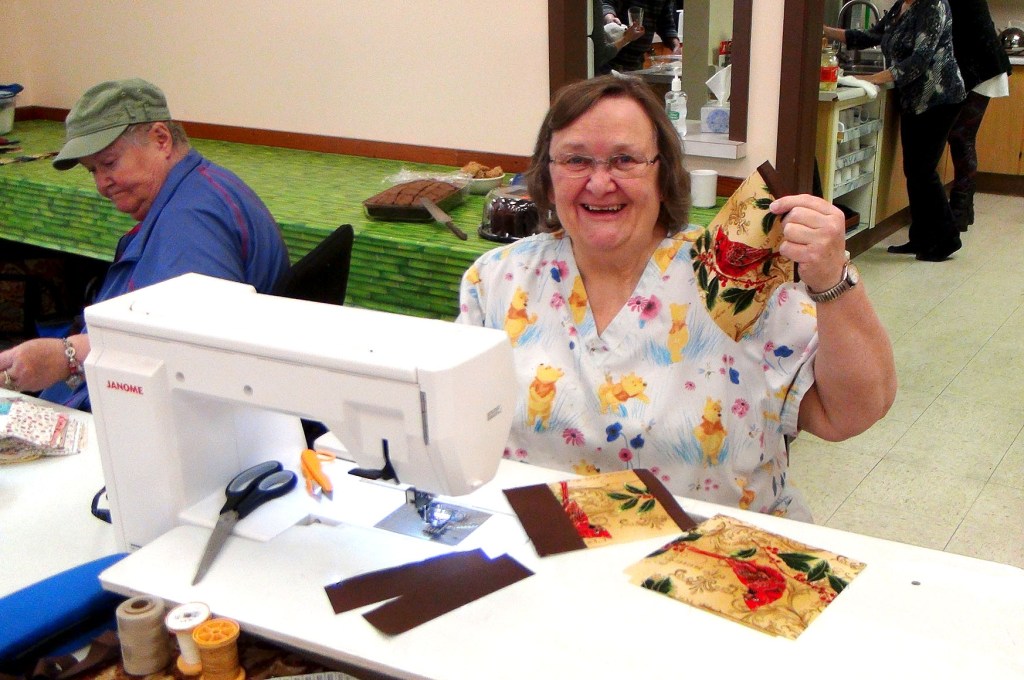
Sometimes, the members set special quilting days to make the panels into quilts. Often, they were hand-quilted on simple lap/hoop frames, though because they were simple designs, members could easily quilt them on their domestic sewing machines. Such is the joy of plain stitchwork. A machine with forward and back straight stitch suffices for quilting even today. Many started sewing on replicas of the simple treadle machine, first marketed around 1850, and that rhythm can still be heard today when sewing.
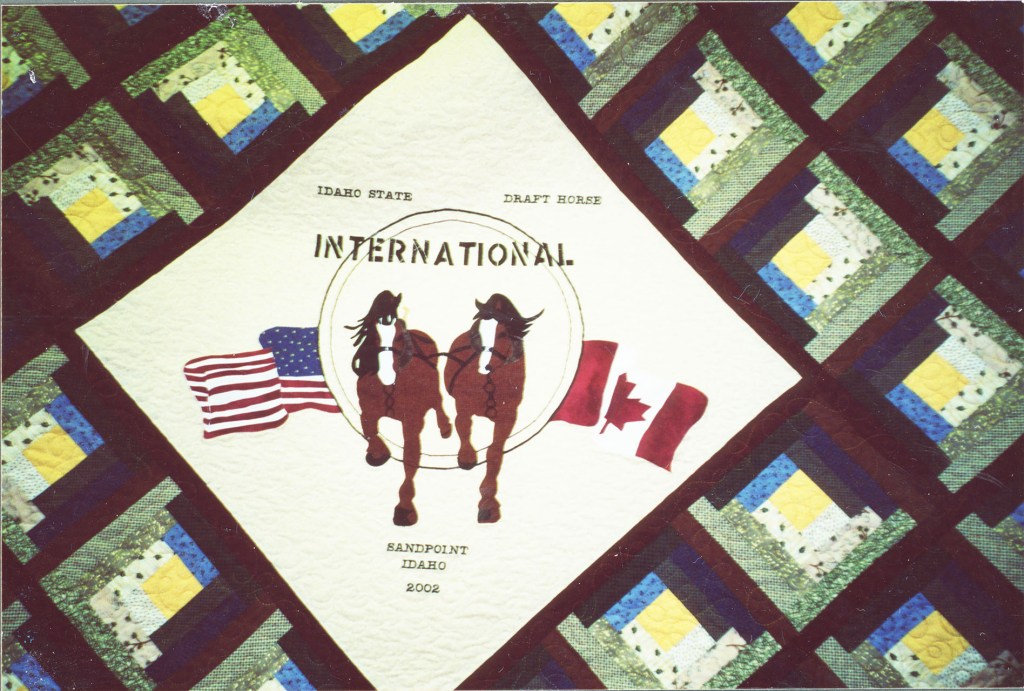
The Guild also made quilts for other groups to raffle, initially to make money for its activities. One raffle quilt was made each year until the government imposed regulations on raffles. The payment in part for using the Seniors Hall was a beautiful quilt: Rose of Sharon. Since the spring of 1985, all guild activities have been held in the hall, and all equipment and fabric is stored there. For a few years, the guild donated $150 to 200 to the hall for the extra building use. A quilt to raffle was a better deal as it fetched $600- $750. These quilts were pieced by members and hand-quilted.
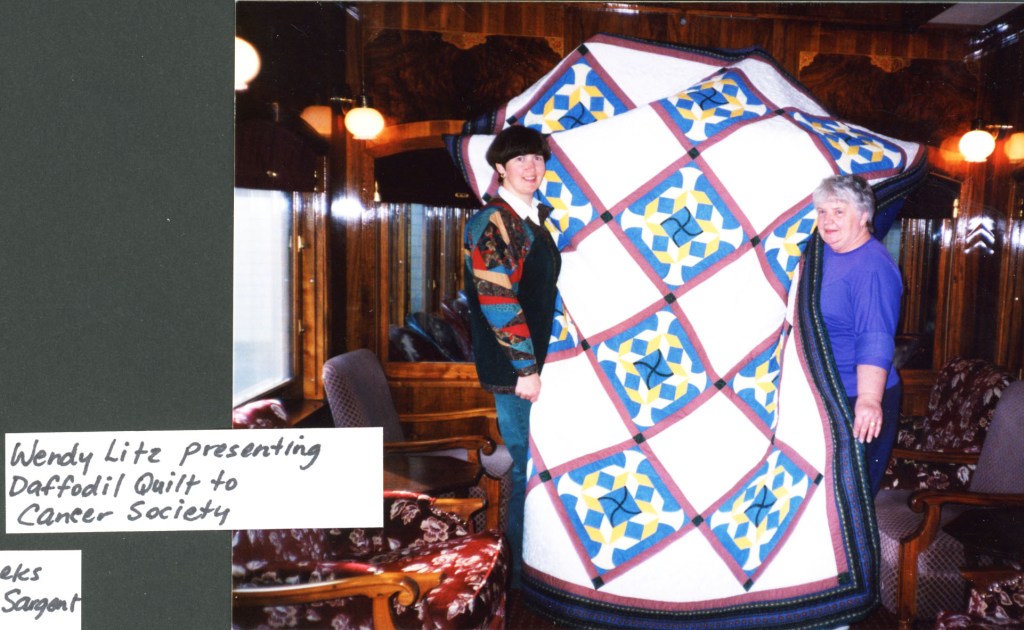
One year the guild was approached by a family of a young mother who died of cancer. Members finished quilts she had started for her children. Her husband gave the guild $200 as a thank you, and with this money, the members made a “daffodil” quilt in the mum’s memory for the local Cancer Society to raffle. This event seems to be the first time the guild responded to a request from the community.
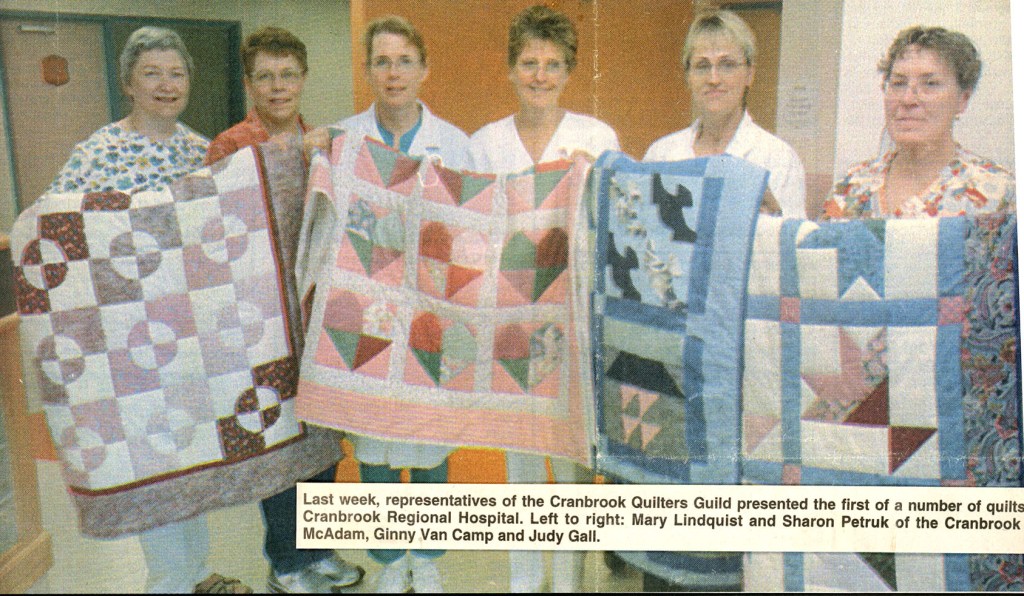
Records don’t list the number of quilts given each year. The expectation was that a member would make one donation quilt per year or at least help with one. In 2017, the guild’s Worker Bee Wednesday group started to make donation quilts from fabric given to the guild. A generous local woman had donated $2,000 to purchase material for donation quilts. These were bigger quilts – lap, twin and larger, more suitable for teens and adults. This group significantly increased the guilds reserve of quilts to donate. The primary recipients include local groups – Oncology and Maternity/Paediatrics, Transition House, Infant Development and Bellies for Babies, and Mental Health. One tally showed 400 quilts distributed between 2016 and 2021, including quilts sent by members following the Lytton Fire.
Sample of requests/donations 2010-2016
2010-2011
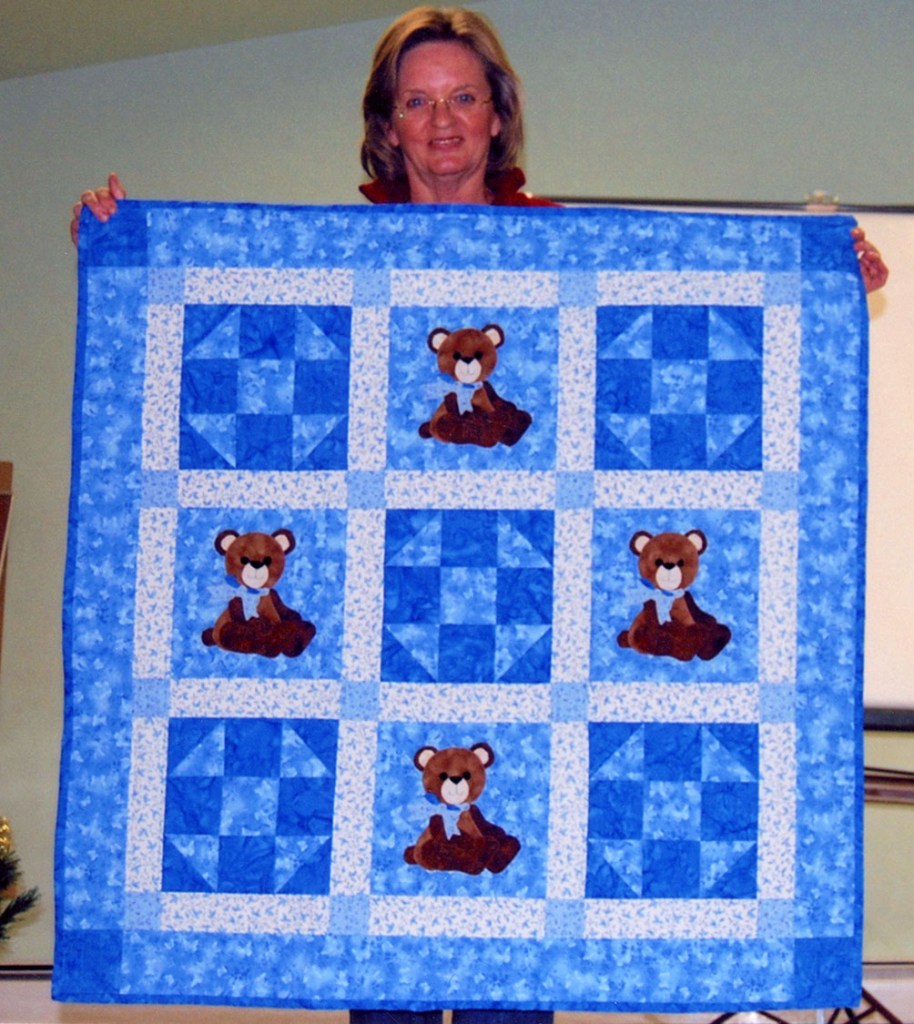
– Community Quilts – 15 (Maternity four, Infant Development – three, Transition House -three, Better Babies two)
– Book bags for CBAL at Christmas
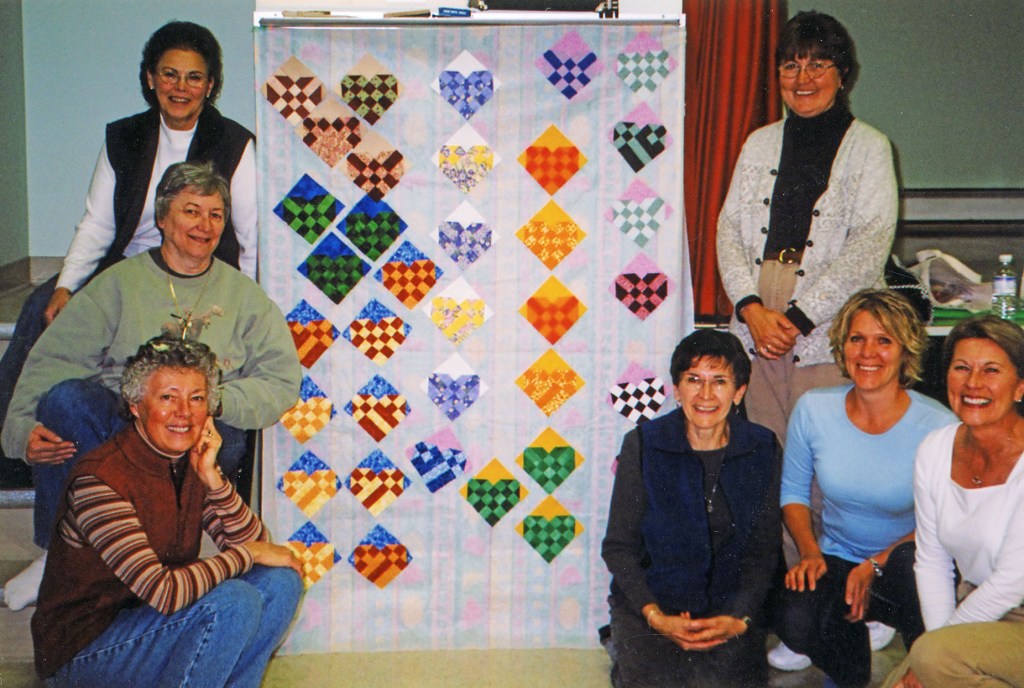
– Heart Quilt (hand-quilted) to Heart and Stroke Group for Curl-a-thon Silent
Auction
– two “Streak of Lightening” mid-size quilts for sisters in elementary school coping with family loss
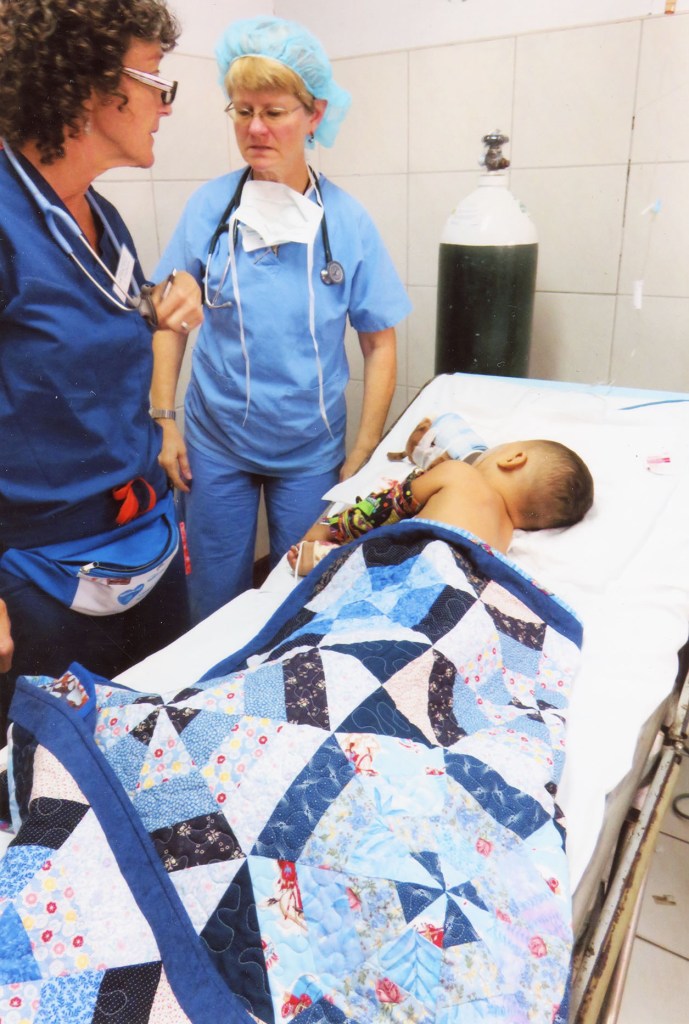
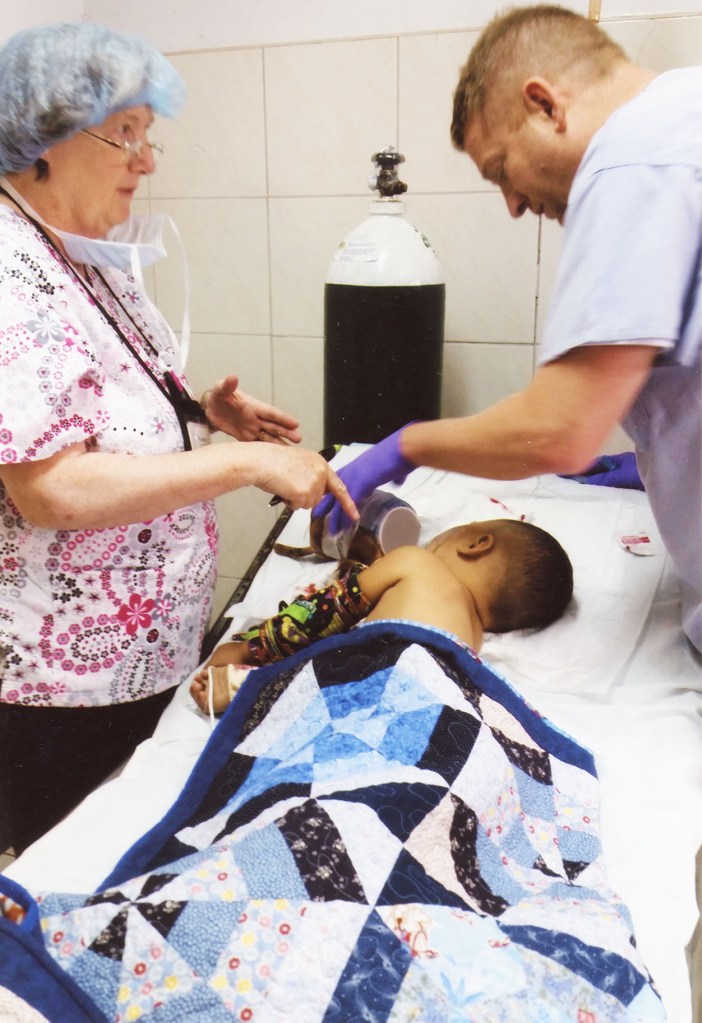
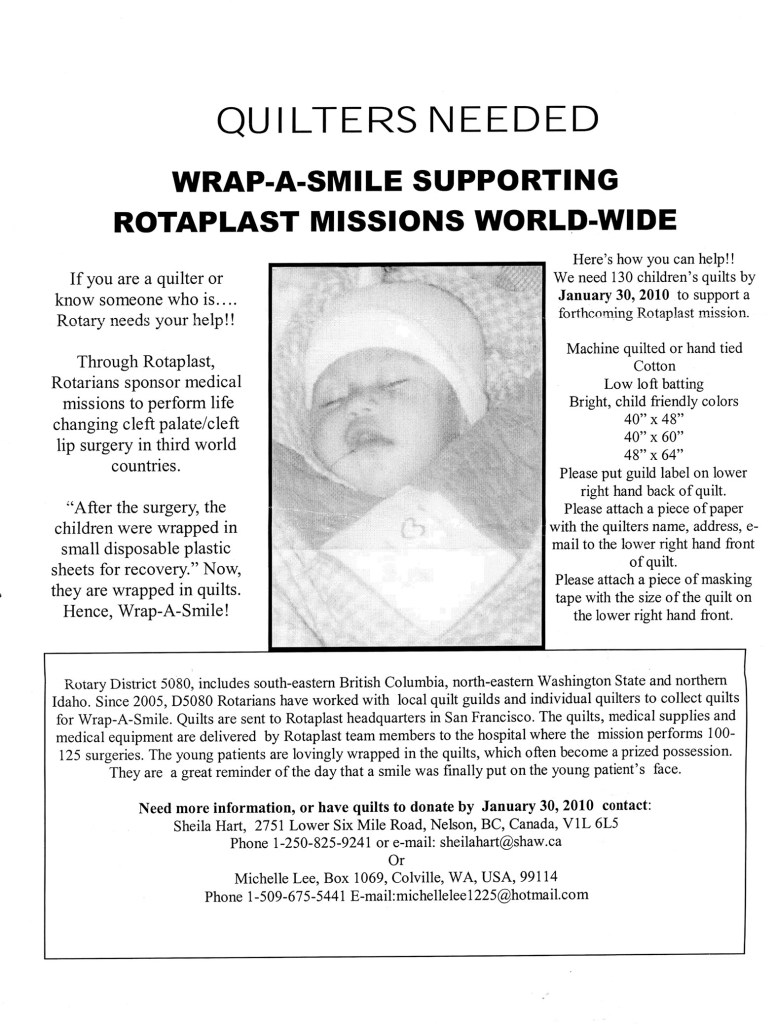
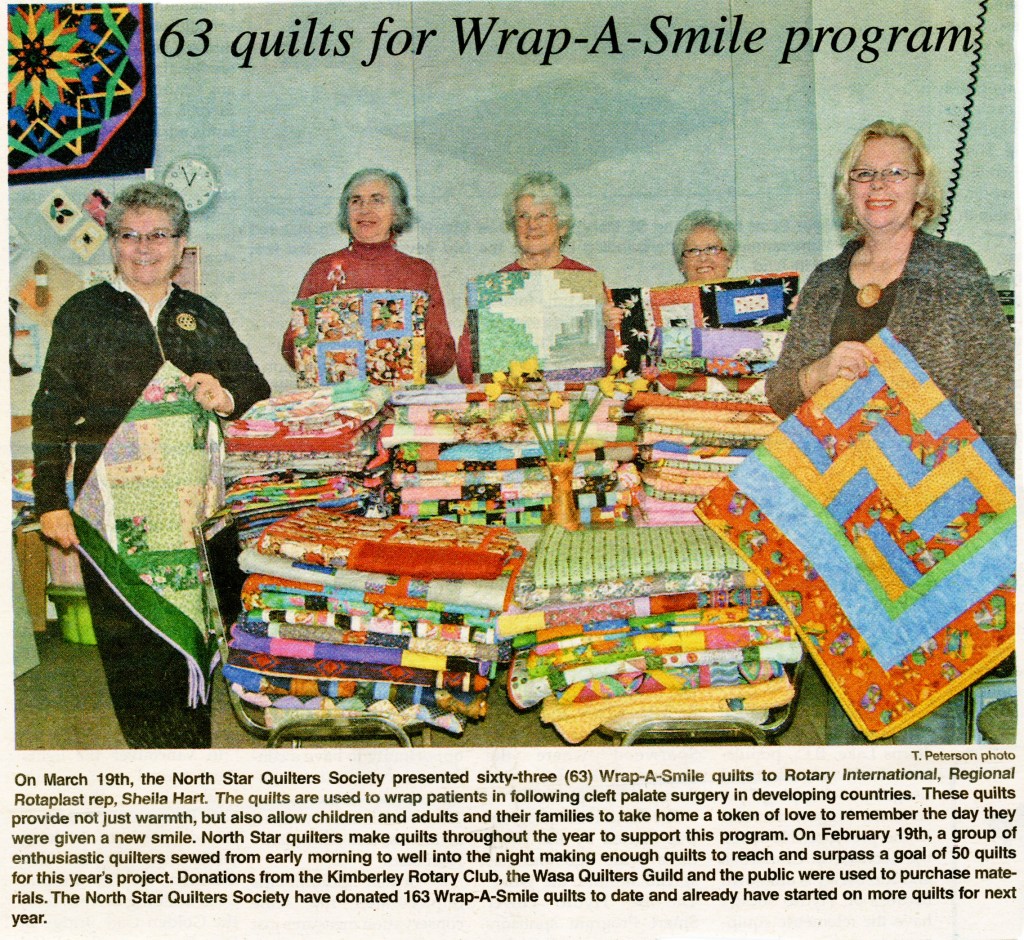
– 27 quilts to Rotoplast’s “Wrap a Smile” campaign
– $250 to CQA Added Purse Prize (had given $550 in 2007 and $200 in 2008.
– Fabric Leaf bowls requested by CQA 2011-2012
– Bereavement Bags to EKRH
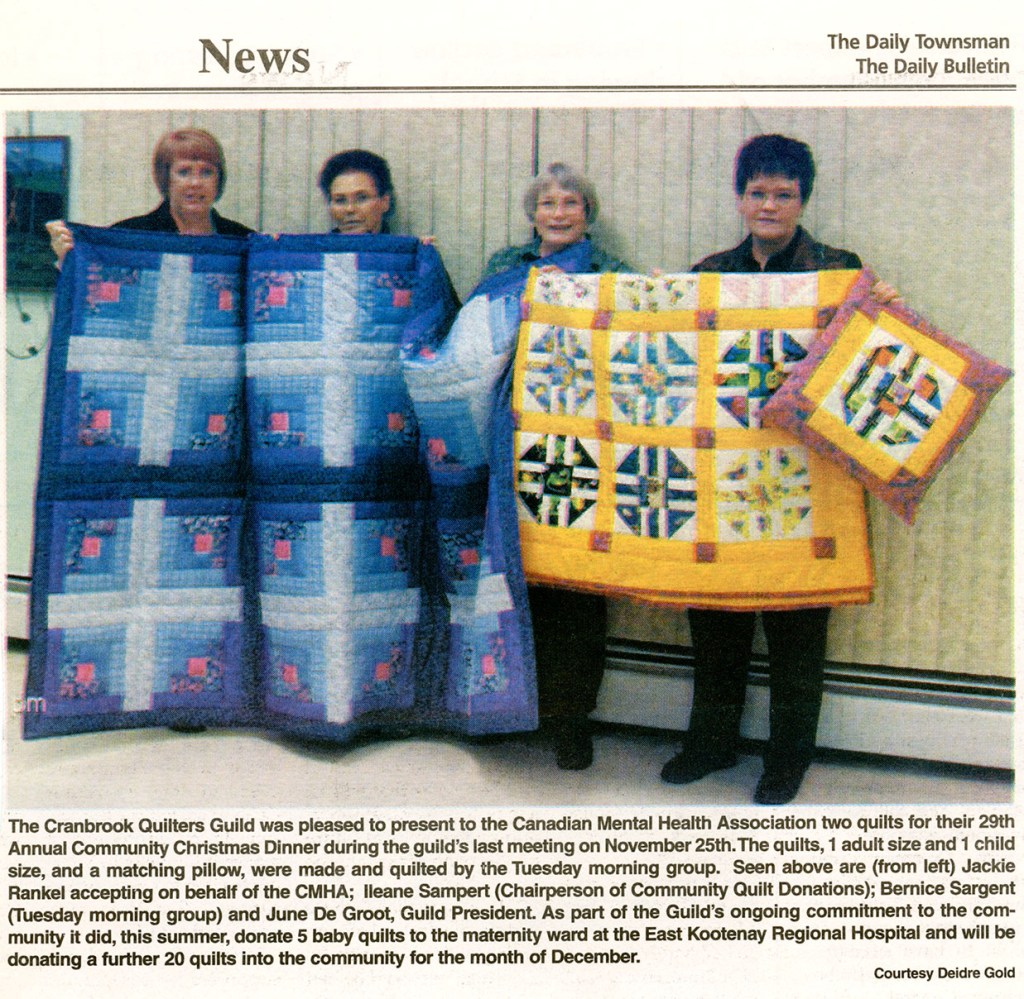
– four quilts for the Canadian Mental Health Association (CMHA) Christmas party
– 42 quilts – maternity 10, Better Babies 10, Infant Development 10, Transitions House 12 – with 15 large ones in reserve. Monetary value ~$15,000
– log cabin for a member’s grandchild
– hand-quilters were asked to tie a quilt top (circa 1920) for the Hospital Auxiliary Thrift Shop to raffle. Tying a top was a method of “quilting” in the 1920s rather than hand-quilting to keep the layers together.
– added collecting food items for the Food Bank at the Christmas and Year-end events
Baby Quilts and Comfort
2012-2013
– Community Quilts – two Canadian Mental Health. Six – Transition House, Six Bellies for Babies (Infant Development still had 6) 2013-2014
– High River Flood (community received over 1,000 quilts)
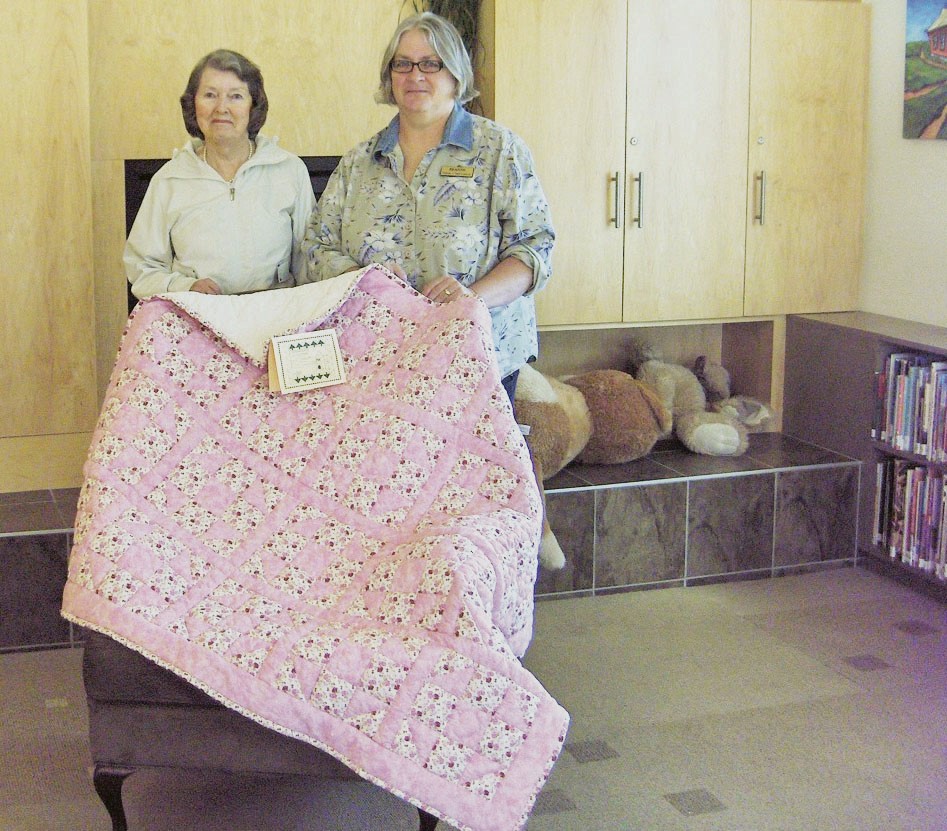
– Cranbrook Public Library – Quilt for the Nursing Chair
– Six to Transition House and Better Babies. Comment from someone at the Transition House – “when you don’t have anything at all, and you receive a handmade quilt, it’s overwhelming.”
– made a quilt from a father’s shirts for his family
– quilted ten tops given to the guild by the Thrift Shop and used as donation quilts 2014-2105
– Centennial Quilt finished after two years and donated to the City – hangs at the Train Museum at the Cranbrook History Centre (CHC)
– five quilts given and six in reserve 2015-2016
– Rock Creek – Westbridge Fire – requested size quilts (two members donated queen-size quilts)
– 57 flannel pillowcases to Oncology plus chemo caps and shoulder wraps
In 2012, feeling inundated by donation requests, the members motioned that “the CQG’s donation to community groups or fundraising projects will be one or more quilted items or quoted items on a request-by-request basis.” The rationale is that “the guild is about making quilts – that is what the guild does, and therefore, that is what we will donate. Furthermore, we can respond to only some requests. We can be selective, but each request should brought to the membership”(November 2012).
Giving in a nutshell
The giving described on these pages represents only a few of the years of the guild. Each of the 35 years has a similar summary. And likely the accounts of all Canadian quilt guilds would be like Cranbrook’s. This represents untold hours of members’ time and resources. Today (2023) a lap-size quilt is valued at about $1,300 in goods and maker’s time. That estimate doesn’t include any costs related to the equipment used. One of the aims of this History is to show the working of a functioning group. A cautionary tale is found in the guild’s community outreach and tangible giving. The women don’t simply gather to enjoy learning the hobby they have chosen. They, in essence, are asked to “work” for the guild, to keep the learning happening and preserve the art, within and beyond the guild. Each year it seemed that the community asked more of the guild. During the Covid 19 pandemic, the guild was approached to make masks. This was similar to requests made of women by The Canadian Red Cross during the two world wars. The cautionary tale is that the giving can become too weighty and donation fatigue can take hold of the group. The Centennial Quilt which is the pride of Cranbrook, took over 2500 volunteer, or unpaid hours, to complete.
Quilters are simply proud of their quilts. Their pride extends to generously giving quilts to folks in the community to enjoy and find some comfort. If guilds decline in popularity, this giving will decline too, though individual quilters will still donate pieces to charities, after all that’s what quilters do.
Guild members still help when needed but are reluctant to take on executive or committee positions and to respond to the requests from the community. The group started with happily giving baby-size quilts and now, the agencies want larger quilts up to queen size.
Other local quilt guilds have proceeded in a similar fashion, supporting their own communities and larger international projects. It’s what we do!” – North Star Quilters Society
 CranbrookQuiltersGuildHistory