
Women United by Quilting

Pinning a quilt top to quilt it by hand or domestic machine – Beth Lenz, Sandra Martin, Wendy Murdoch. Pattern is “Hanging Garden” by Cozy Quilt Designs.
The Cranbrook Quilters’ Guild started with evening meetings – the 2nd and 4th Tuesday of each month. Initially, the quilters continued activities through the summer and later they decided to pause from early June to September when their children were off school and summer activities opened, like golf. The evening meets were attractive because the women were mothers and most worked. As one member said, “We had a business and two growing boys, so the daytime hours were full.” Even the Tuesday morning time worked because the kids were in school, or the small ones could come with Mum as the space in the Cranbrook Seniors hall was large. In the past, it was common for children to play under quilt frames while their mothers quilted. The jobs were teaching, nursing, retail, and service provider. Interestingly, the 30 and 40-year-olds started the guild while they worked, and the often-heard response now is, “I’ll join the guild when I retire.”

Women’s homes were different in 1985—less labour-intensive with automatic washers/dryers, electric stoves, vacuums, and freezers. But their children were involved in activities—skating, soccer, music lessons—so daytime hours were consumed. Most women drove, and two-car families were the norm. Quilts weren’t needed—they were what the quilters wanted for their family or home.
The guild sanctioned making quilts for yourself – for the pleasure of the activity. It sanctioned making quilts for your family/friends. And almost to appease the collective conscience, it included a bylaw that provided for giving to the community. An unwritten societal expectation was that women were to be “servants” – to give to support the greater good. Most women’s groups were like the Cranbrook Women’s Institute, Ladies Aides to church congregations or the IODE – the two world wars had set the stage for that type of service for women. So, in a sense, a quilt guild or weavers guild where you enjoyed the activity was a “contemporary concept,” especially when you were using “family funds” to buy the fabric.
Quilting is a costly hobby, becoming more so with all the new “must-have” notions. Today, a metre of fabric costs $20 – $30, depending on the designer. In 1985, it was about $2 a yard. In between, Canada adopted the metric system, while the US stayed with yards and inches. As the USA is the most significant influencer in the quilting world, all patterns are in yards and inches. This makes it hard for a new quilter that can’t convert – 1/4″ seam is 6mm, 1 inch, 2.5 cm. When a few members volunteered to teach quilting in the Grade 9 fabrics class at Parkland Junior Secondary, they found the students needed a lesson on converting measurements.
Education


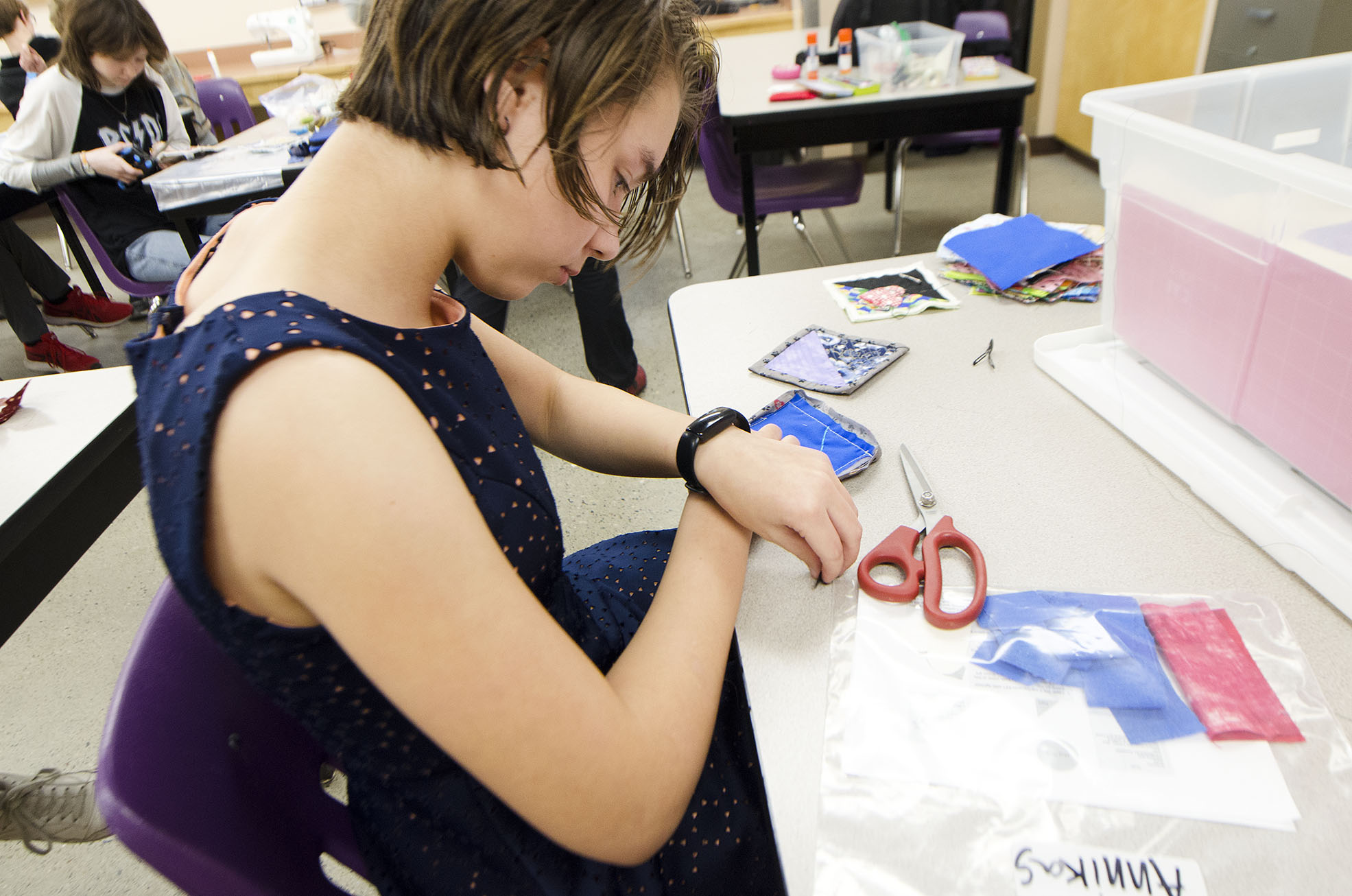
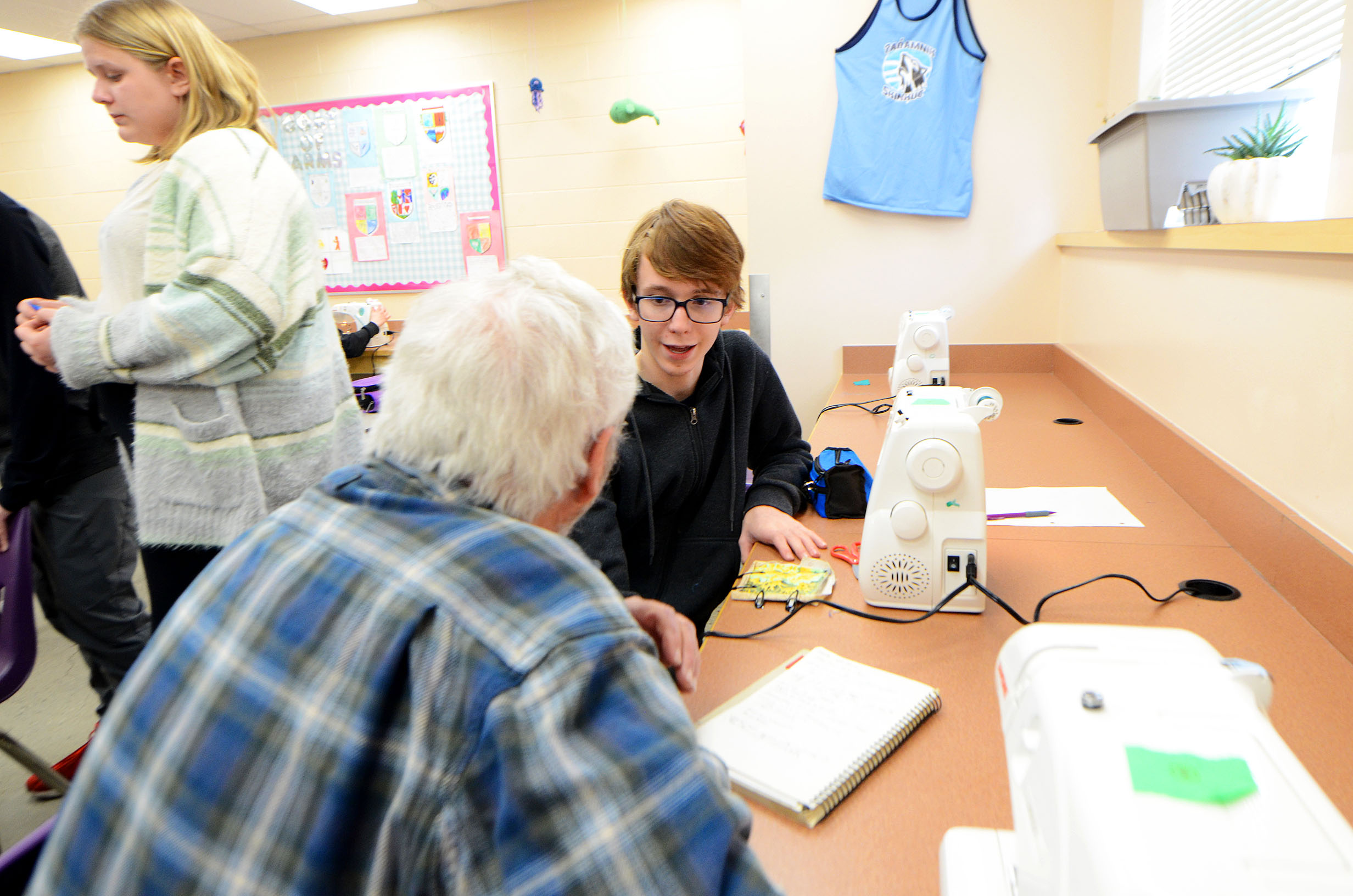

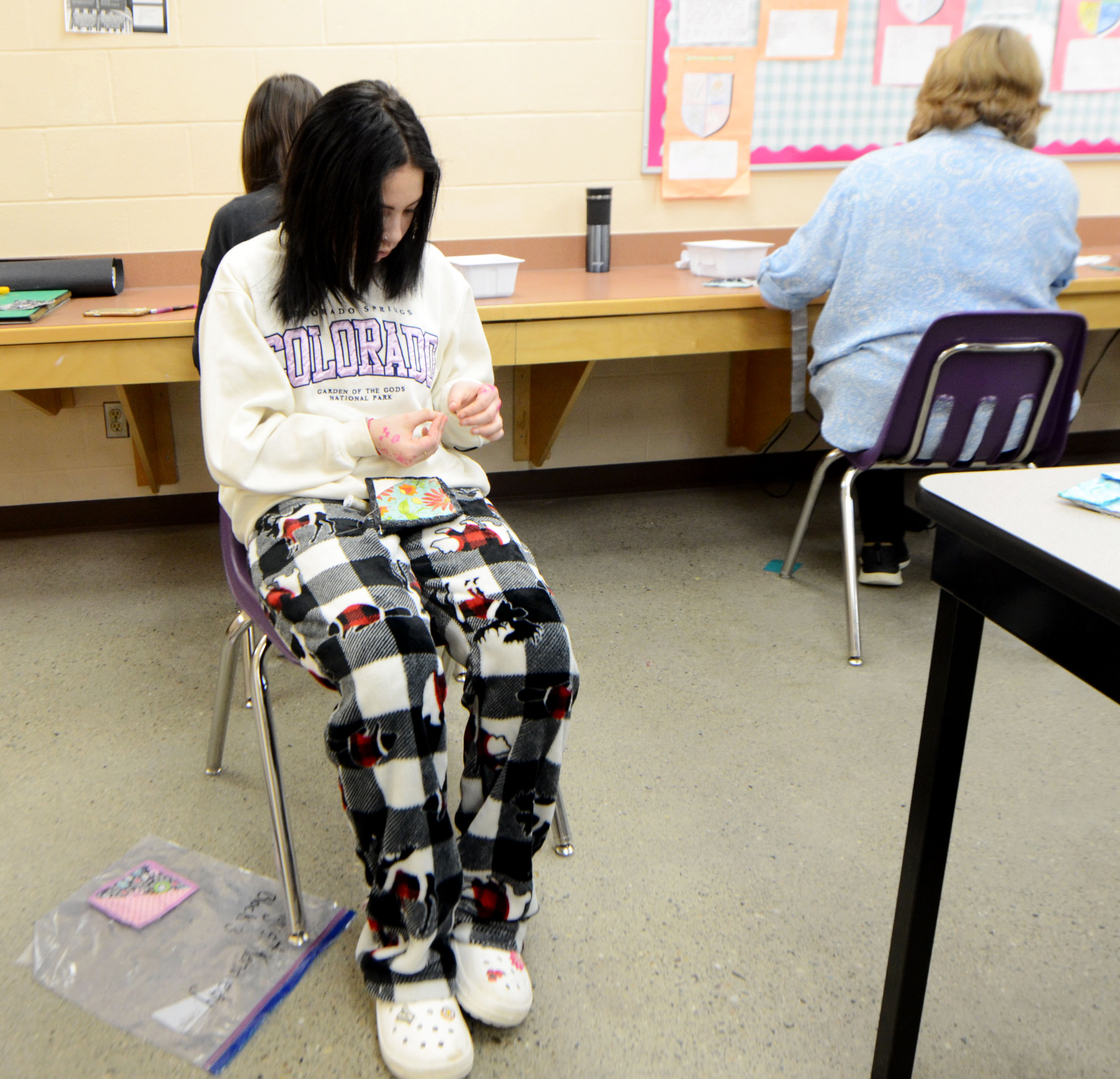
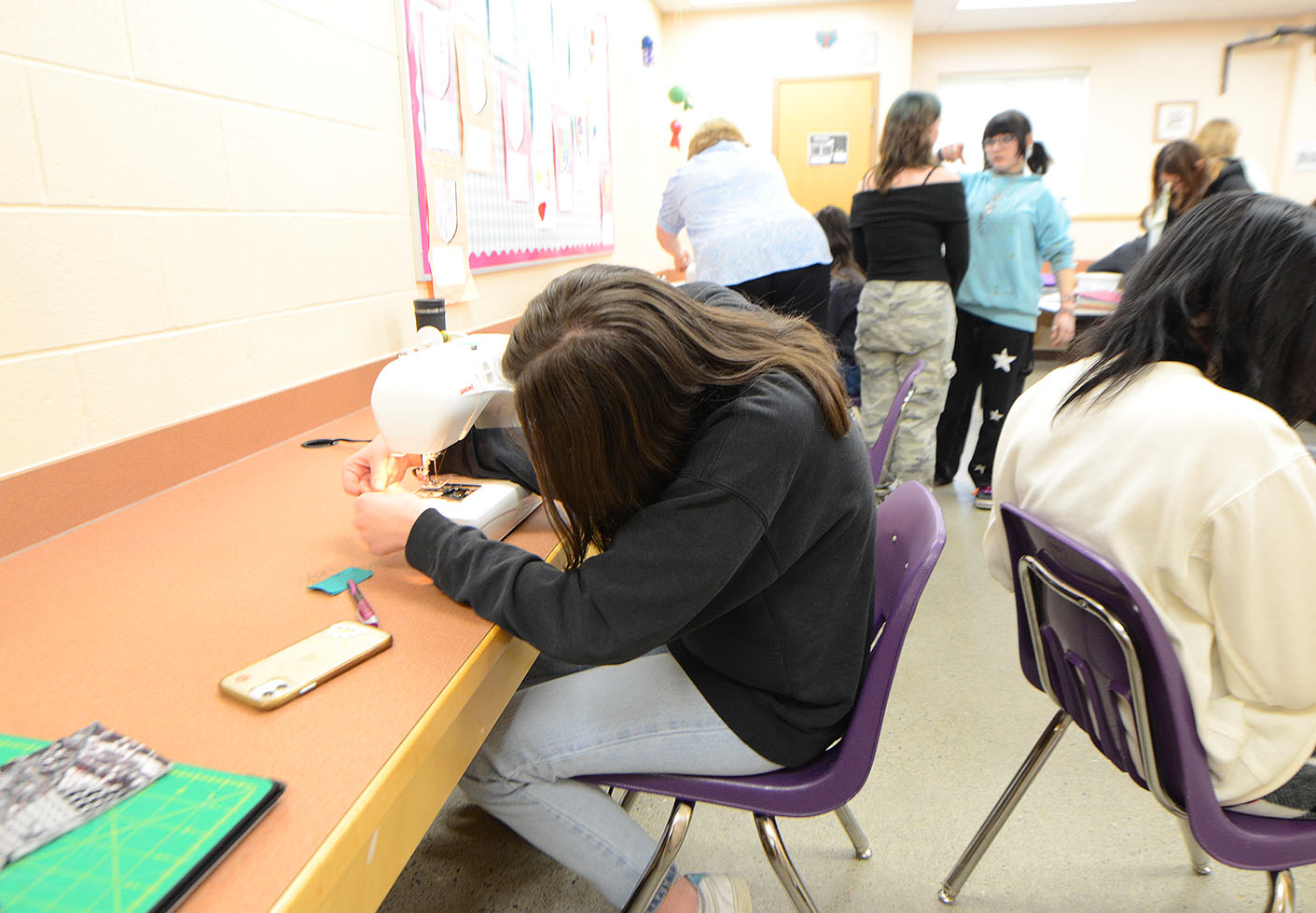


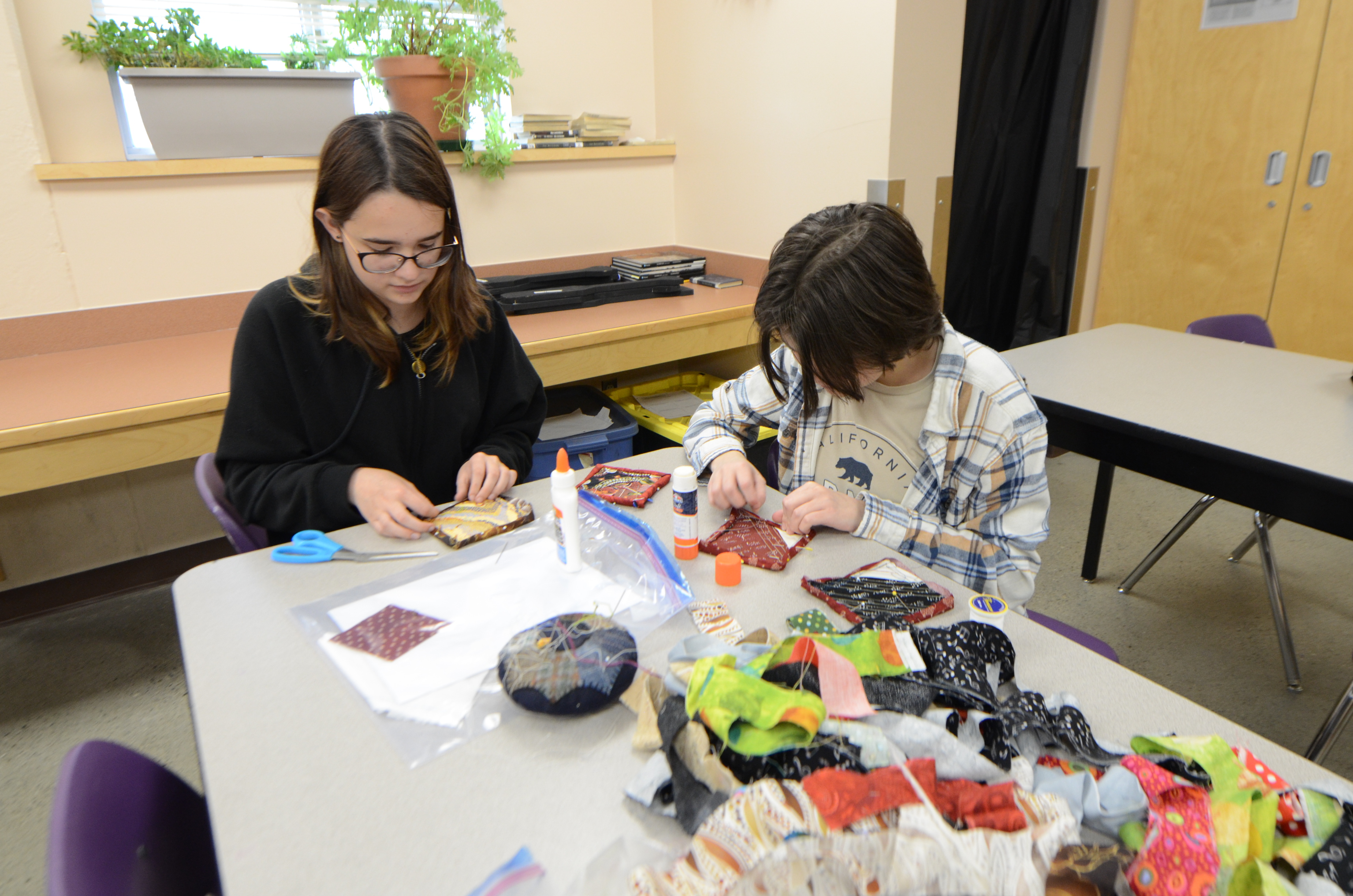
Grade 9 Students – Parkland Middle School – Susan Little, Shirley Neil, Marg Hall and Ivy-Lynne Stein taught a unit on quilting. Images courtesy of the Columbia Basin Institute of Regional History (CBIRH).
The guild’s first purpose is education. To teach people the techniques used to make a quilt. Guild members would learn a technique and then teach the other members. It’s important to acknowledge Lisa Sharpe as the local educator. Lisa developed a “sampler quilt,” which advanced your skills with each block you sewed.
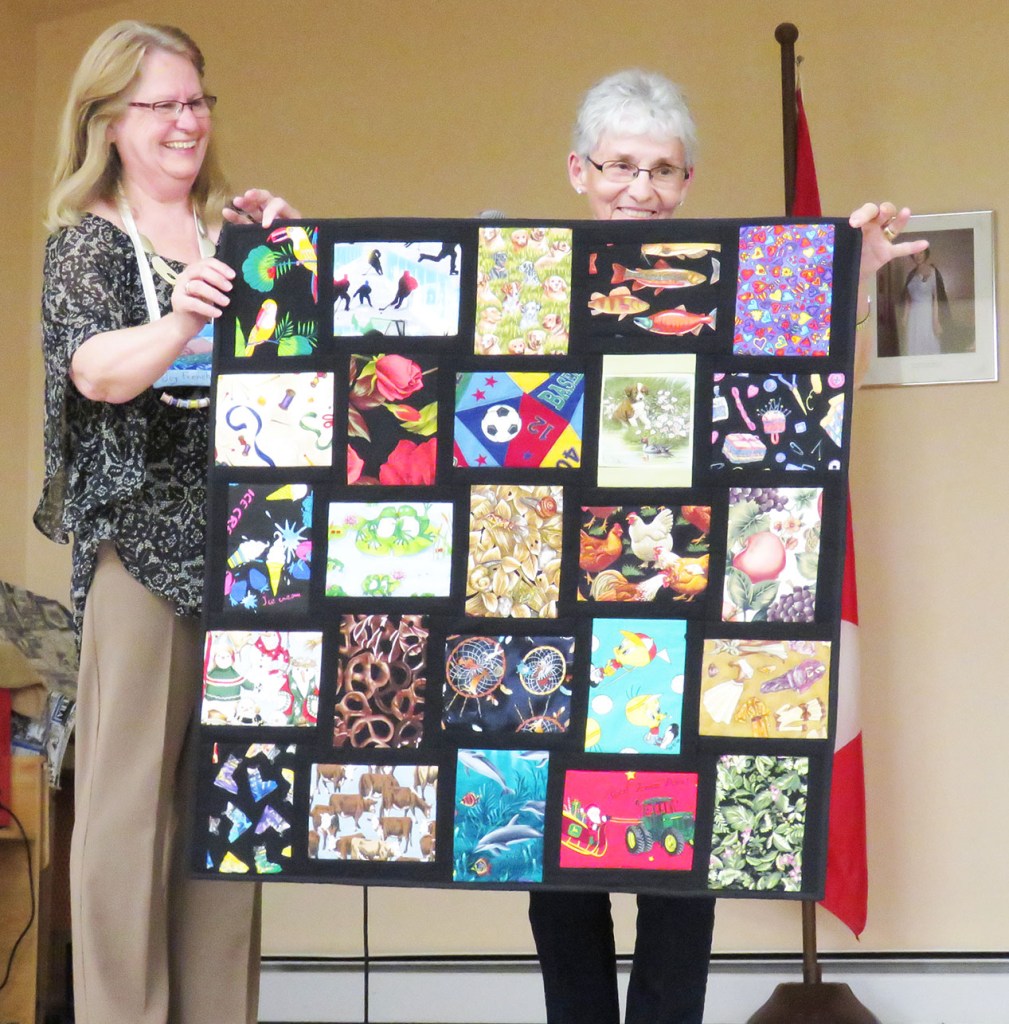
It started with a traditional nine patch, and in the end, you were creating Dresden plate blocks and appliquéing these to the background fabric. All in six or eight evening classes. Again, evening classes worked for many Cranbrook women, although some sessions were during the day at Lisa’s home in Bull River. Before the guild started, Lisa had taught classes through a local shop, “Sew Unique,” which closed in 1986 just before Fabricland’s opening. When the guild started, she taught the members. In about 1989, Lisa began offering classes through the Cranbrook Parks and Recreation program. Many local quilters started quilting from Lisa’s course.
One member’s story
“My sister took Lisa’s class in 1988 at Lisa’s home. She used Christmas fabric. When I started with the guild in 2007, I created three table runners for her from her blocks. I ventured into free motion to quilt them on my new Janome Memory Craft 6600 ($2,500). I took Lisa’s class through Parks and Recreation in Fall 1992. We had just moved back to Cranbrook – our kids were 16, 4 and 18 months. I finally finished my quilt on September 14, 2014 – 22 years later! It would still be in the closet if I hadn’t joined the guild. It’s my favourite. It has a wool batt, and I hand-quilted it. The stitches aren’t as tiny as I can make now.”
Workshops and Programs
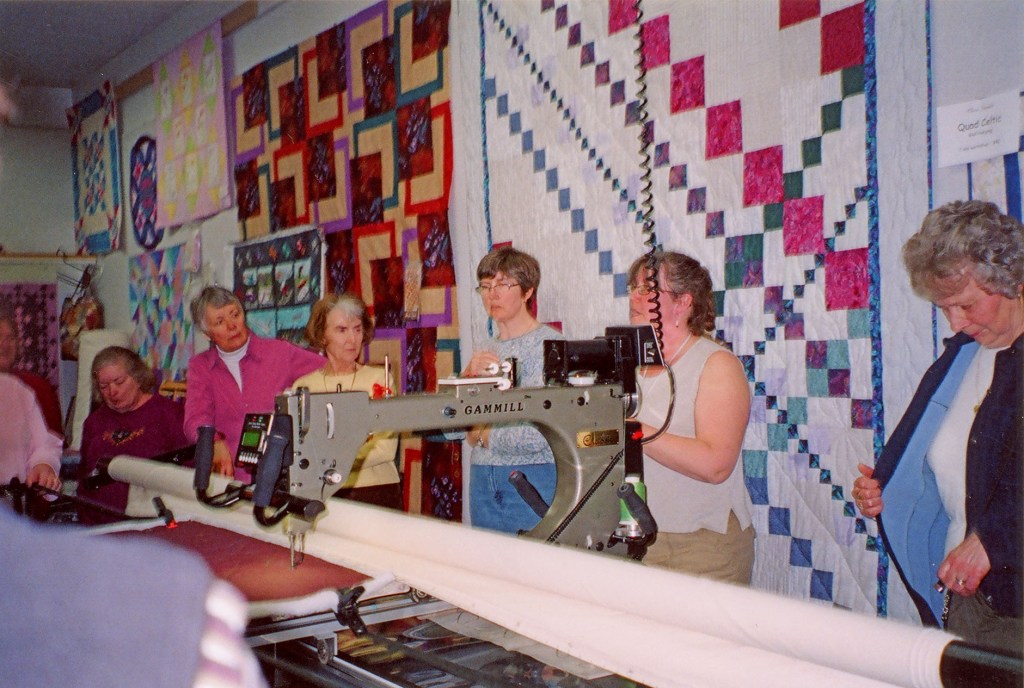
To cover the costs of the workshops when the guild was first formed, the workshop coordinator applied for funds, often from the Arts Council of BC. This was the pattern for several years. The guild was a member of the Arts Council until the demands of that organization exceeded what the members were prepared to do. By then, the guild had become financially independent, having had several successful raffles and quilt shows. Besides member dues, these were the ways the guild made money. The funds covered most of the costs, and members paid a nominal fee of $5 per day. For instructors from out of town, a member would offer to “billet” the instructor – it seems this was a standard protocol for women’s groups.
The guild often brought in instructors. Dianne Jansson of Diversity Quilting in Pritchard, B.C., was a frequent instructor on topics like the pattern Storm at Sea, which is still considered one of the most stunning designs. Pam Clark from Spokane taught members to free motion quilt on our domestic machines with her “Design with Lines” technique.

retreat weekend at Three Bars Guest Ranch and later at Bull River Guest Ranch. Most years the retreat was in February (off-season for the sites). Some years there were two retreats – fall and early spring.
Juananne Whales became a “certified instructor” of the technique, which allowed her to teach the course. The Cotton Tree quilt shop offered it a few times, and the guild added all the booklets to its library.
Most workshops have been “in-house” for the past few years. Meaning that members teach other members. With the issues of pattern copyright and method ownership, this style has limitations. We have to take care that we don’t breach copyright. Ethically, we can only go to a workshop and then teach it locally with the originator’s permission. With so many patterns, block of the month, and techniques “free” on the internet, there is a lot to entice us; we have so many talented members that we don’t have to look far for an instructor. The current policy is for “cost recovery” when planning a workshop – no doubt a concept from business brought to the guild via its members. If not enough members sign up, the workshop is cancelled. Today, professional instructor fees run in the neighbourhood of $200 – $600 daily. Even when the workshop is delivered on “Zoom.” On Tuesday mornings, we’ve settled into a pattern with one of our seasoned quilters guiding interested members through patterns and minor projects.

Sample of workshop topics:
Quilt Border Designs
Lumber Yard Scrap Management
Easy Pineapple
Flying Geese Placemats
One Block Wonder
Reverse Applique
Bargello
Two or Three Colour Mystery Quilts
Colorado Star Log Cabin
Sparkle Nine Patch
Mondo Bags
Convergence
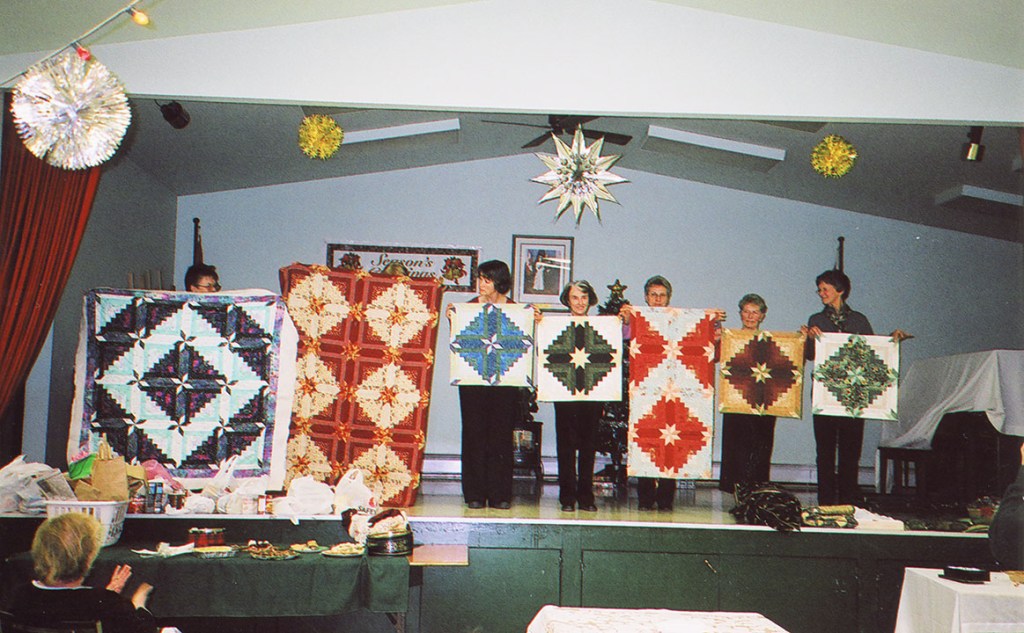
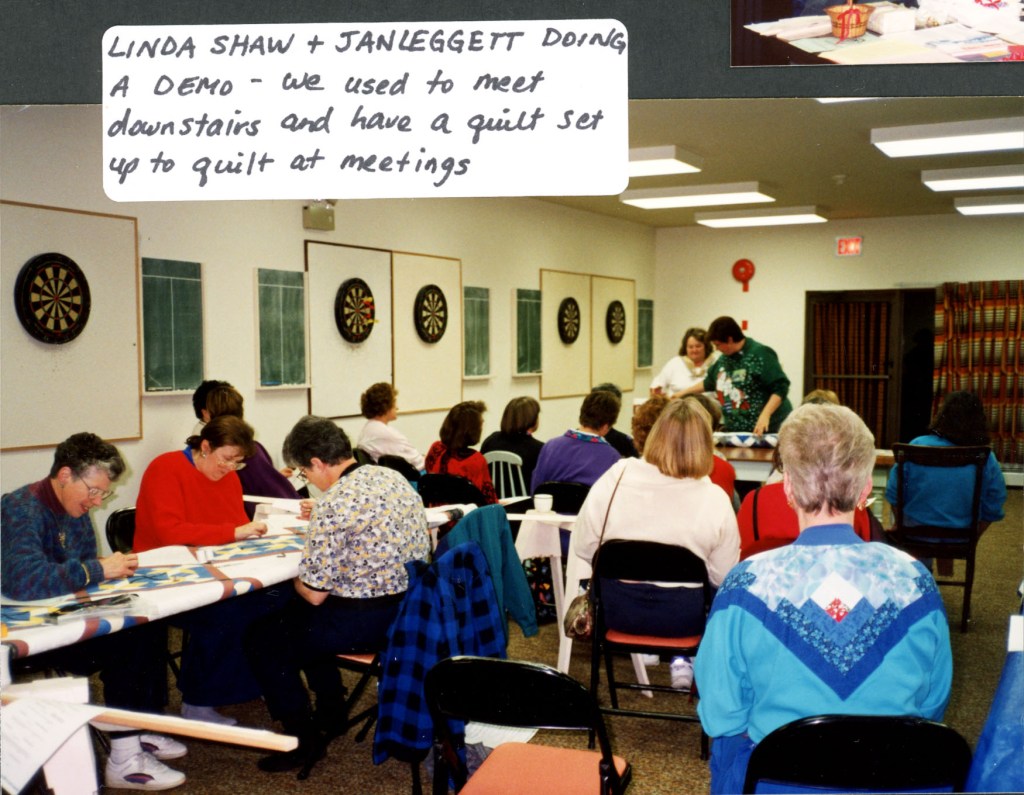
The program offered at the second monthly meeting was another grand educational opportunity or delightful viewing and inspiration. The “Program Coordinator” would plan these meetings cajoling members to volunteer to prepare a program for the night, and members presented a wide array of topics for example paper piecing, binding, easy half-square triangle, collage. The picture below is likely a “truck show” where a member would bring a “truck” full of their quilts and smaller items, and share the stories behind the pieces. Seeing a quilters creations all together like this left some members wanting to run home and start sewing.

L – back row – Isla Collinson, Janet Smith, Sue Duckworth, Peggy McGowan, Ilene Lowing, Judy Denny, Carol Patton, Debbie Janisch, Maxine Adshead – very back – Donna Bernhardt.
The program offered at the second monthly meeting was another grand educational opportunity or delightful viewing and inspiration. Some topics:
Book reports
Auction
Truck Show
Collage
Stash Busting
Metered Corners the easy way
Bags, Bags and More Bags.
Fashion Show
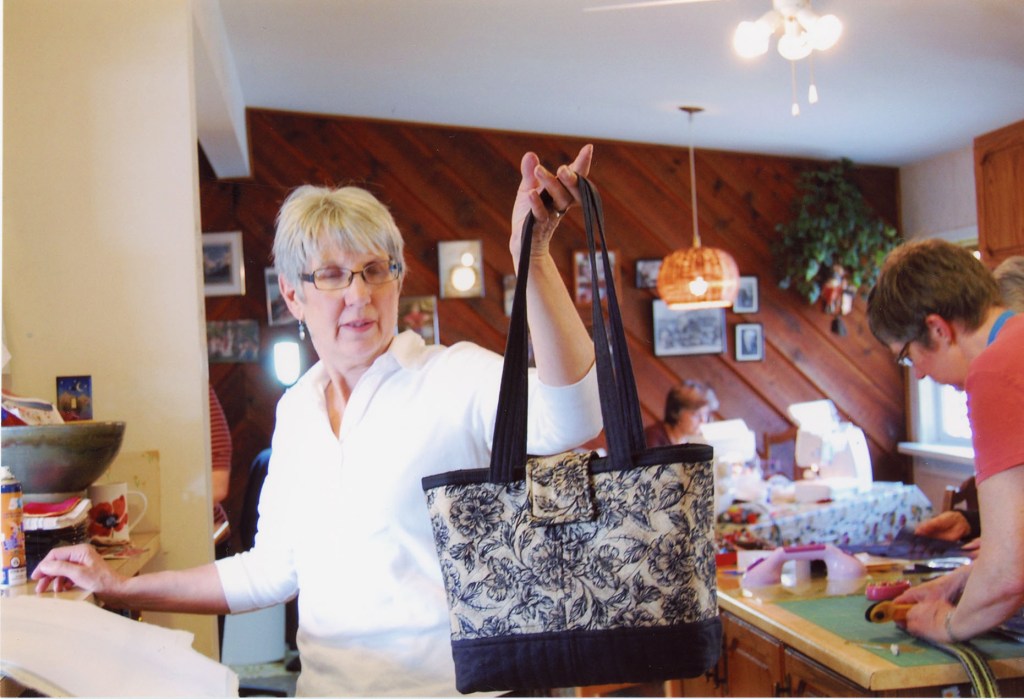
June DeGroot’s bag and Wendy Litz cutting in the background.
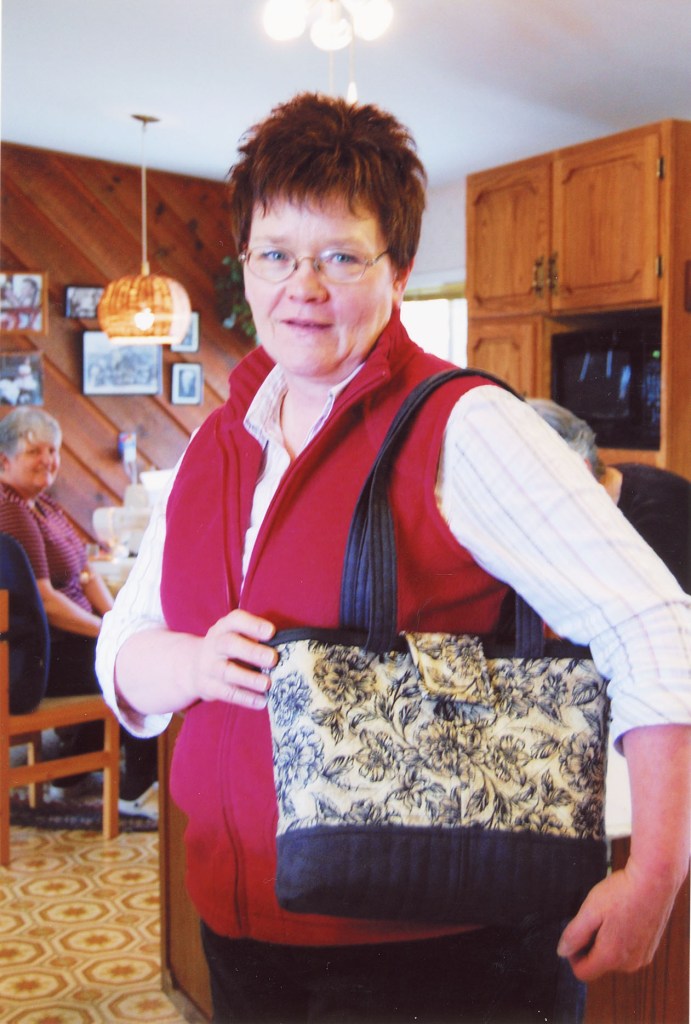
Images below: left to right, June de Groot with Judy Wright in the background and Susan Little at Show’n Tell. All images courtesy of CQG

 CranbrookQuiltersGuildHistory